Surviving the Red Chapatti
The Reading Edition — complete
The same events set into the order they happened and divided into chapters, with the wording smoothed for reading straight through. For Bill's own words, read the manuscript.
The whole account on one page, for reading straight through, printing, or saving.
- OneTwo Boys from Shildon
- TwoIndia
- ThreeInto Burma
- FourThe Retreat
- FiveCaptured
- SixThe Big House
- SevenThe Early Days
- EightOut on Working Parties
- NineNo Good San
- TenMaking Do
- ElevenThe Mechanics' Camp
- TwelveThe Sick
- ThirteenThe Hospital and the Condemned Cells
- FourteenThe Cruellest Blow
- FifteenLiberation
- SixteenThe Long Way Home
- SeventeenComing Home
- EighteenAfter
Chapter One
Two Boys from Shildon
I was born on the 29th September 1918 in the town of Shildon in County Durham. Tom Raine was born there too, and from the very beginning we were great friends. We went to school together and spent our free time together, and when our fathers — both railwaymen — were transferred to York the year we turned seventeen, the move did nothing to part us. We simply went on being friends in a new town.
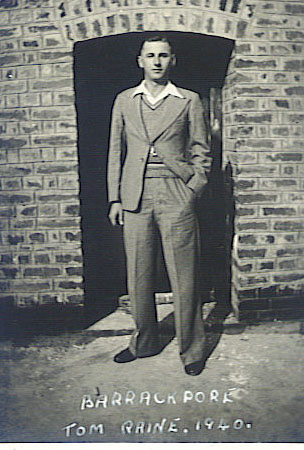
In the late summer of 1939 the two of us were sitting on one of the rides at the fairground, killing time until two o'clock, when we were to register for the Militia at the Employment Office. The terms were six months in the forces followed by three and a half years in the Reserves. The pay was to be one shilling a day, and out of that we were expected to buy our own cleaning materials — shoe polish, Brasso and the like. It was only after the mothers of the called-up lads made their feelings known that the rate was raised to one and sixpence. As it happened, the war began a fortnight or so before our call-up on the 15th of September, and we found ourselves paid two shillings a day instead.
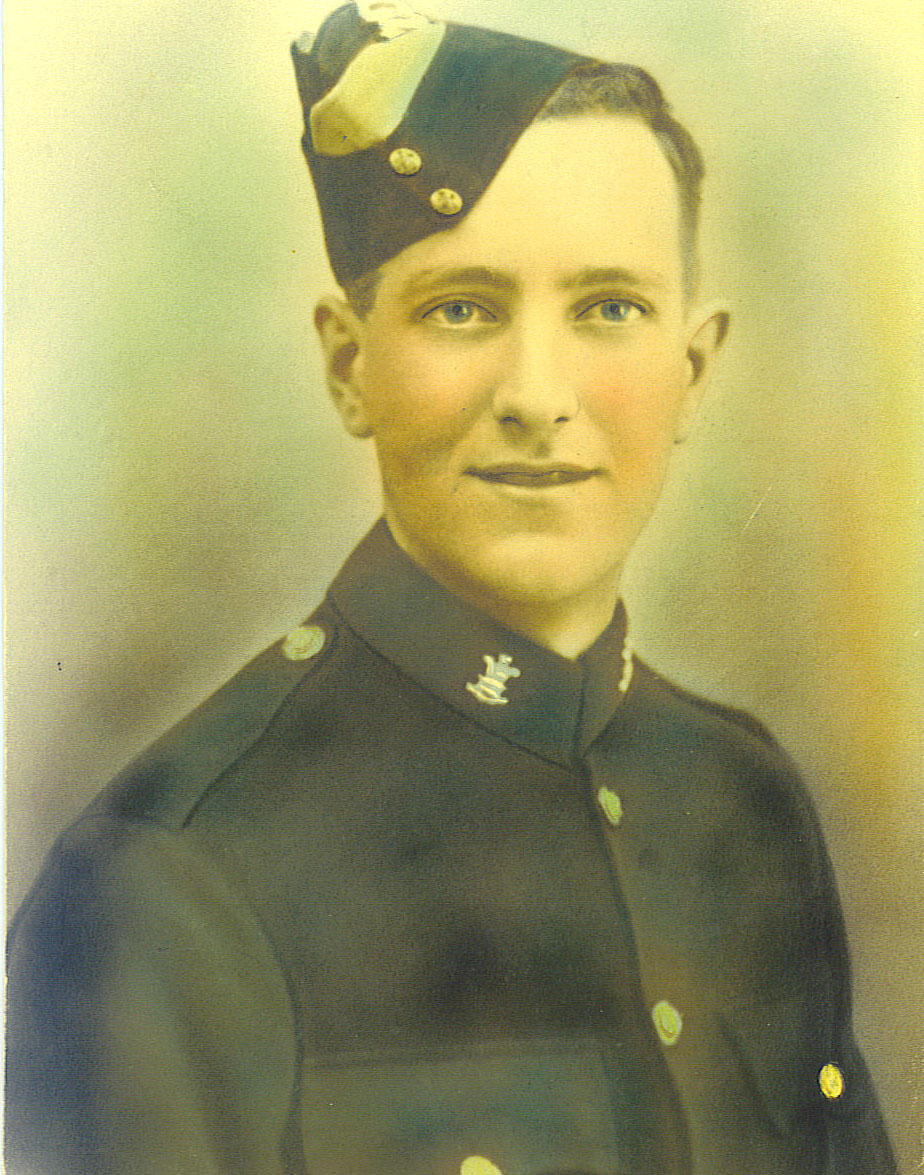
We both began our training at Fulford Barracks in York. After about ten weeks we were on draft to India, to join the West Yorkshire Regiment. Neither of us could have guessed, sitting on that fairground ride, how far from home the next five years would carry us, nor how few of those who set out would come back.
Chapter Two
India
For the next two years our home was India. We were billeted for a time at Calcutta Barracks — the black hole, as it was known — and spent some of our hours at the Ronaldshay hut, where there was entertainment laid on for the troops.
It was there that one of our chaps, a man everyone called Tiddles, met a Eurasian girl and began to see her. More often than not he stayed the night with her and slipped back into barracks before reveille. The two of them had a trick of going down to the railway station, where the train would draw out into the sidings until it was time to depart; they would climb aboard and stay there until the off. One night Tiddles cut it too fine and did not get back until after reveille. For that he was charged and given twenty-eight days' detention.
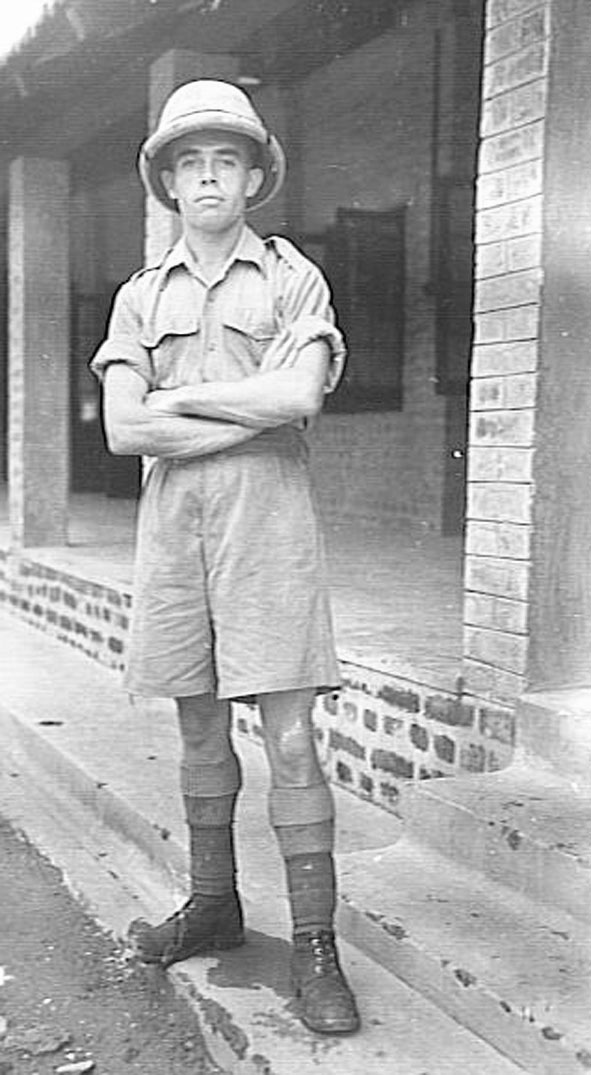
When we were sent up to Ranchi for training, Tiddles was not returned with the rest of us afterwards — unfit, it was put about, on account of his nocturnal activities. Marching back through Calcutta, I was stopped by his girl, who wanted to know where he was. She was frantic with worry, and I had little comfort to give her.
I was recommended for promotion to Lance Corporal, which meant attending a training cadre at Ranchi. Each of a group of four of us was to be put in charge for a day in turn. When my turn came I was handed a destination, a map, a compass and three men, and sent off. We had not gone far along the road before a civilian bus came by, so I told the men to get on it, and on we rode. A little further on one of them spotted the officers' jeep and called out to get down — so down we got, among the sheep and the goats, until the jeep had gone on ahead. We finished the ride in reasonable comfort to the point on the road opposite our destination, then settled down for a good rest before crossing the last mile of country on foot.
When we reached the spot the sergeant in charge informed us that a truck had got stuck in a river ford and that we were to go and free it. The men who had done the march in the proper fashion had had the better of it, for they were able to settle down at the camp while we laboured. I do not think my squad thought much of my leadership that day.
There was time, too, for soldiering of the more peculiar kind. It was decided that the whole battalion should learn basic signalling — Morse, sent with a single flag held up level with the nose. We practised on words like Constantinople, or Mississippi — "Monkey, ink, sugar, sugar, ink, sugar, sugar, ink, pip, pip, ink." Invariably someone would go wrong three-quarters of the way through, and the whole squad would be stopped, hands held aloft, and made to start again from the beginning, everyone suffering for the one man's slip. Having been chosen, a private soldier, to do the instructing, I found it more than a little awkward to keep correcting the officers.
Chapter Three
Into Burma
After two years in India we were on our way to Burma, to reinforce the regiments already fighting there. We sailed on a troopship and came in to Rangoon docks in the middle of an air-raid — a fitting introduction to the war we were about to join. There were no casualties, and before long we set off for Pegu.
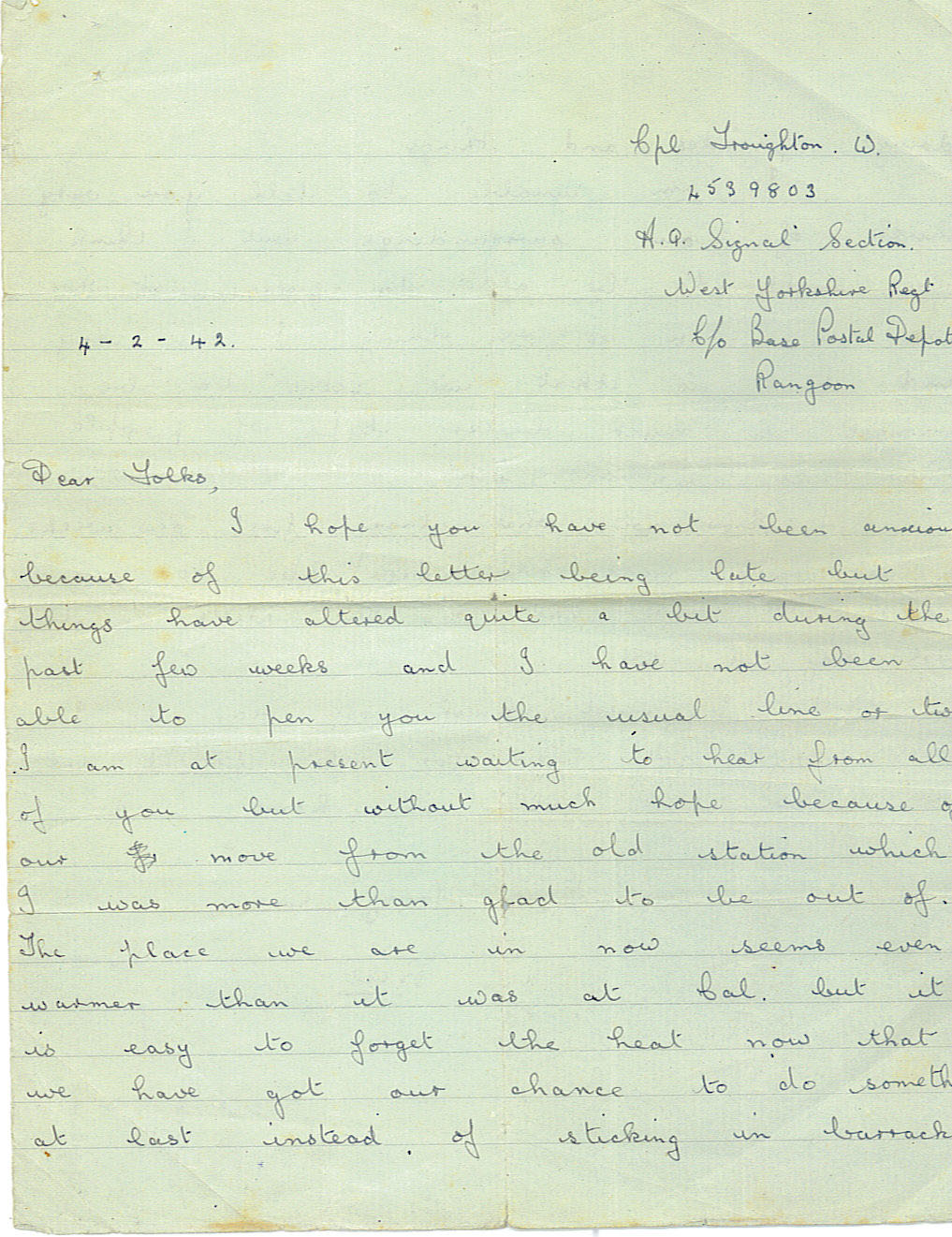
In those last weeks before the fighting closed around us, I wrote home. I did not know it would be the last letter to reach my family for more than three years.
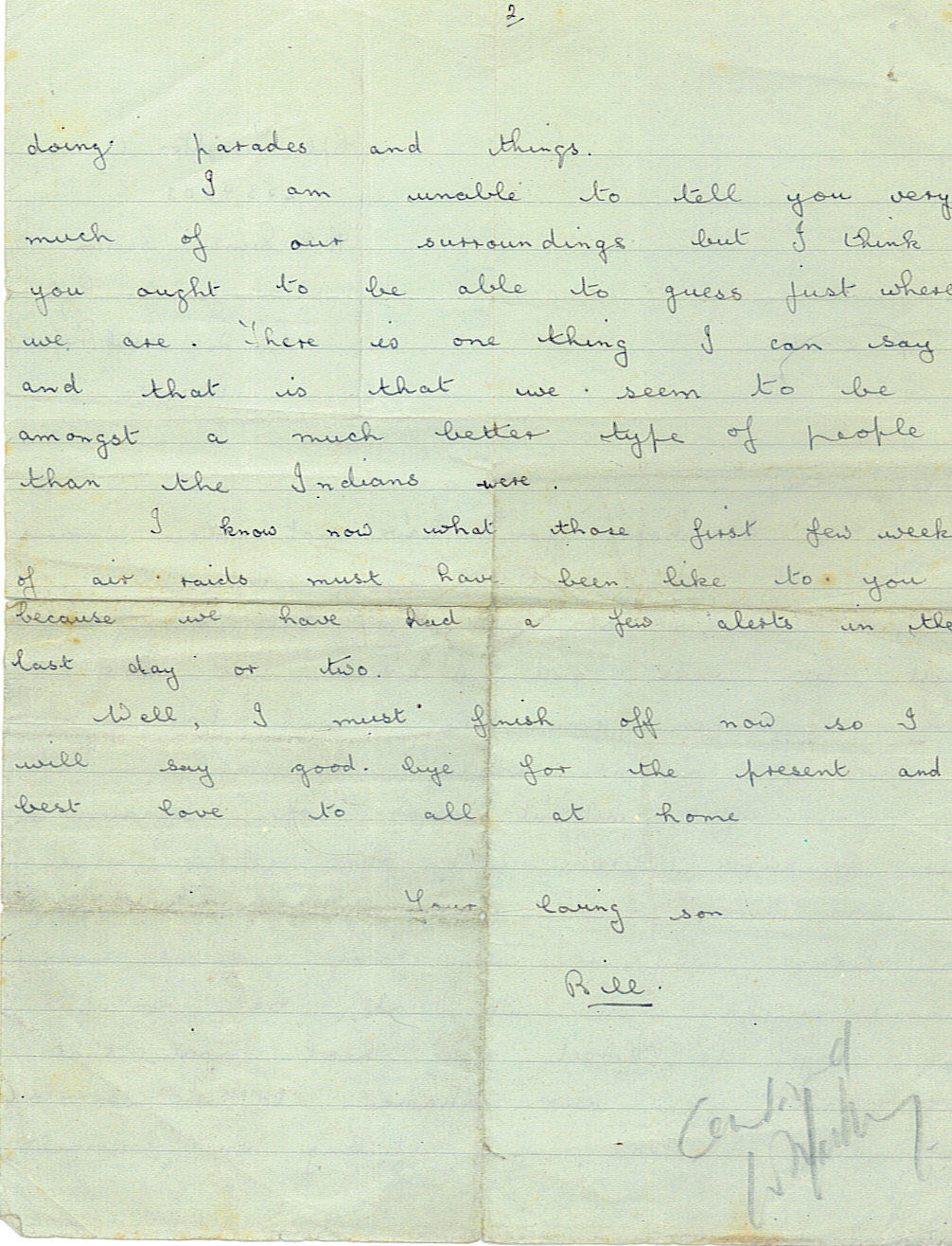
We marched from Rangoon to Pegu. There was no action on the ground, but we were treated to a fine spectacle in the air, where the American Volunteer Group — the AVG — went up against the Japanese Zeros. The AVG men were mercenaries, with no backing at all from the British air force at that time, and they enjoyed great success, bringing down several Japanese planes without loss to themselves. We watched the dog-fights with real enjoyment. It was the last enjoyment of that kind we would have for a long while.
Chapter Four
The Retreat
As we came into Pegu a heavy fog rolled in. Our platoon was lying behind a low earth wall, with the rest of the battalion behind a taller bund to our rear. Out of the fog came the unmistakable sound of metal being knocked into the ground — a machine-gun being set up, no more than fifteen or twenty yards in front of us and barely visible.
I turned to the corporal senior to me and suggested we would be better off moving back. He agreed, and gave the order to retire from the left, each man warning the next as he passed. It was going well enough until a man came up to alert Tiddles and found him dead, shot in the back of the head. It must have been a stray round from our own bund behind us. During the same action the other corporal remarked what a cheeky devil this Jap was, appearing five or six yards off from behind a haystack; I brought my rifle round and fired, and did not wait to see whether I had hit him.
We fell back behind the bund with the rest, and from there began the long retreat towards Rangoon, which we had been told would be held at all costs. We marched along the railway, and the railway had its hazards, for our own troops had done their best to deny it to the Japanese. At one point we came to a bridge that had been set alight and half destroyed; we had to cross it with many of the sleepers burnt away, and one of the chaps fell from it onto his head and did himself considerable damage. Bandaged up, he marched on with us — one more hazard to be nursed along.
It was now that we learned what it was to be hungry and thirsty. For the thirst we stopped at a bullock wallow, shooed the bullocks aside, and plunged our hats into the water, drinking what trickled through the eyelets, filthy as it was — and very likely paying for it later in dysentery. At a village we were offered food, mostly rice on a banana leaf with a few minnows, eyes and tails still attached, and we turned it down. Plainly we had not yet learned what hunger really was. Later on we would have been glad of it.
Somewhere on the order to march for Rangoon, one of our sergeants was detailed to blow the bridge over the Salween River — the very road the Japanese had to take to get into Burma. Looking across to the far bank as he prepared the charge, he saw his own brother standing there. He blew the bridge all the same, and left his brother to the mercy of the enemy coming up behind. There are things a man is asked to do in war that no peace can ever quite undo.
We were not well served by those set over us. Our officer deserted us, taking with him the maps and the company cash that might have aided our escape; he was court-martialled afterwards, having used that money to hire a boat to India. As for rations, where other troops grumbled about their emergency tins of corned beef, ours were pilchards, and the oil they sat in all but boiled in the sun. They were scarcely fit to eat.
Chapter Five
Captured
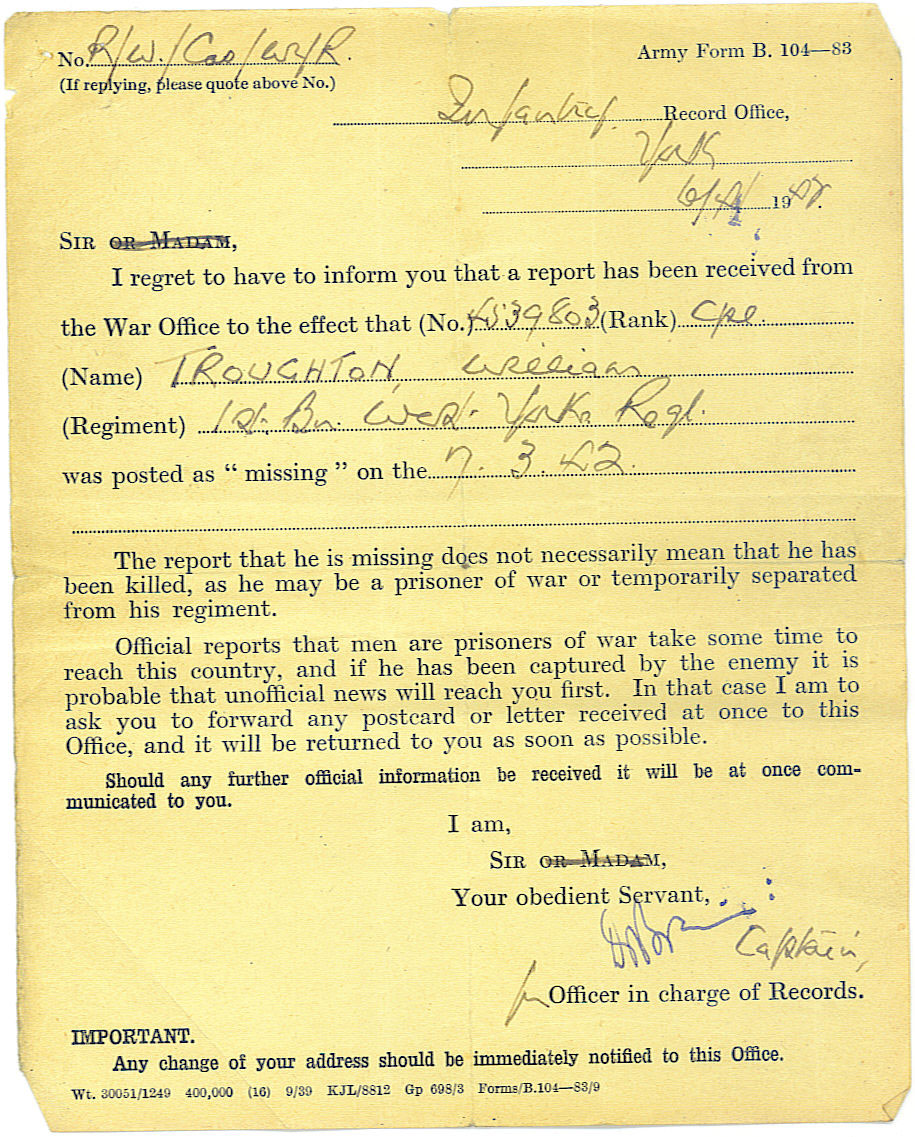
We realised at last that our only hope was to strike north, towards India. Having gone a certain distance we came upon a river. A great many of us could not swim, so we turned back and sheltered in a large hut. From there we could see a mass of Japanese, camped up at a rubber plantation where we ourselves had once camped. By now most of our weapons were useless with rust, and there was little we could do when the enemy patrols found us. We were taken prisoner and marched to the plantation.
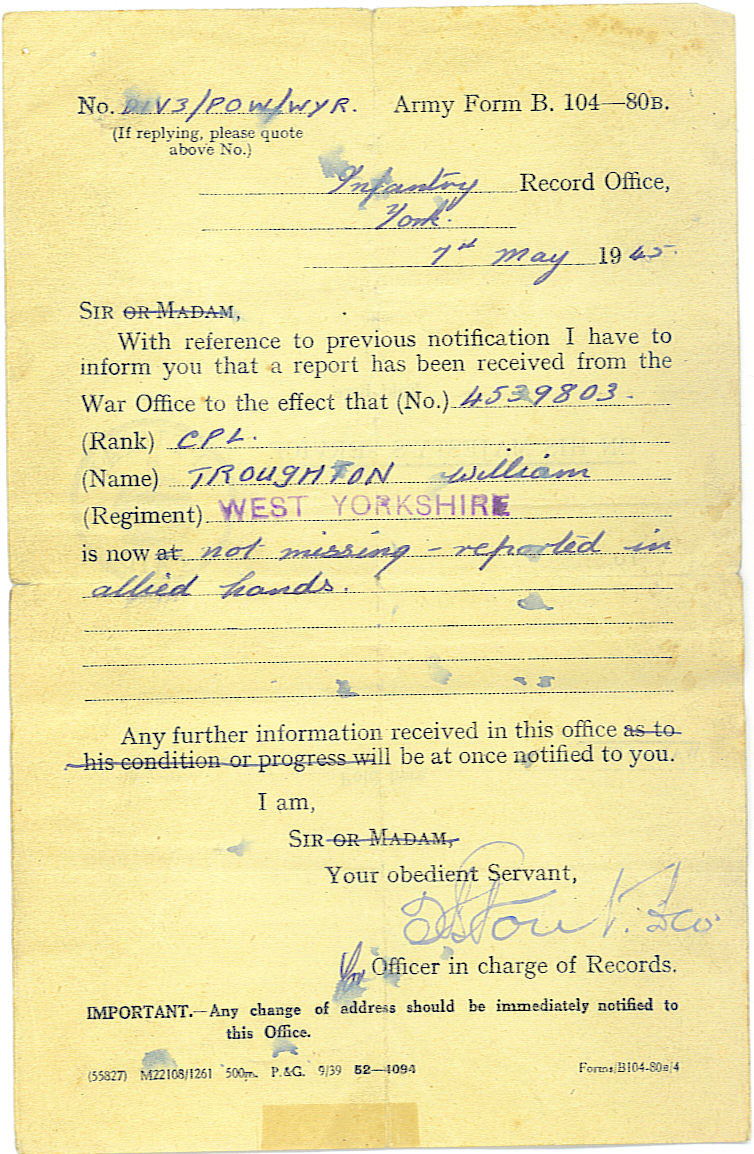
Word of all this took its own slow road home. My family received a War Office form telling them only that I had been posted "missing". It did not say I was dead; it said merely that I might be a prisoner, or temporarily separated from my regiment, and that they should wait. They would wait three years.
From the plantation we were marched to a large house some miles back towards Rangoon, given a space to sleep and a small area for the day. After a couple of days a party of men, Tom among them, was sent into Rangoon for rations of rice and dried potatoes. Two of our number were appointed cooks, on the strength of experience they claimed to have. Their only utensil was a metal bath tin, which they filled with rice and water and set over the open fire. They used perhaps a quarter of the water needed, and the result was a mass of burnt, half-cooked rice that we ate over the next three or four days.
Then we were told we were to go to a big house in Rangoon, and set off to march there. As we passed the city prison, Tom assured everyone that it was now a ration store, which we would go by on the way to the "Big House". He was entirely wrong. The "Big House" was the prison, and we halted outside its gates, were searched, and were taken inside. There we emptied our pockets and whatever containers we carried, for the Japanese to take anything they thought we should not have — knives, forks, even the needles from our housewives, all of which, they said, might be used as weapons.
Chapter Six
The Big House
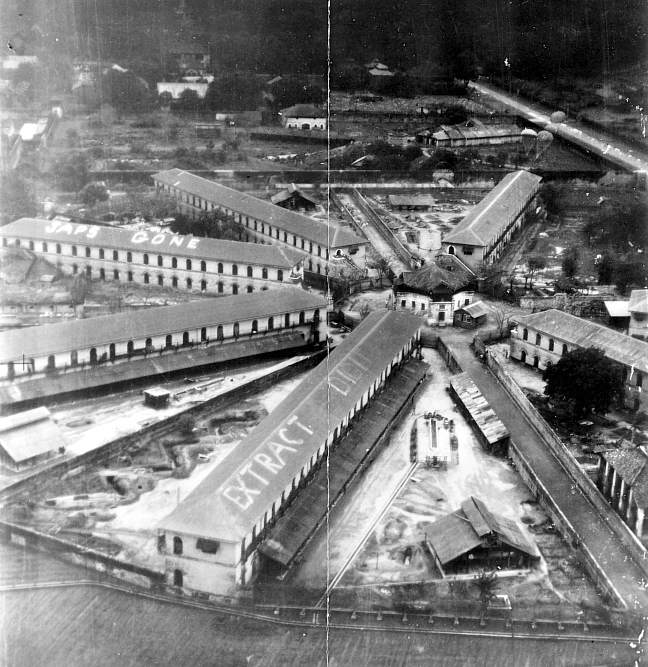
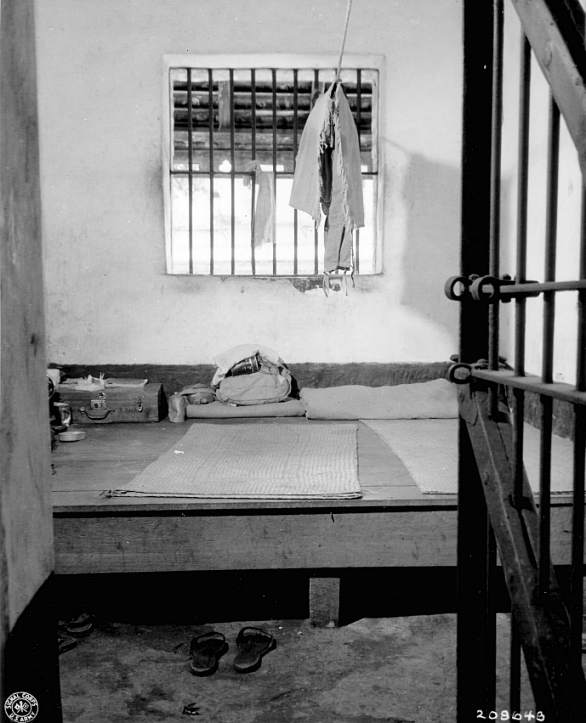
Rangoon Jail had been built to hold civilian prisoners — twenty to a cell, in blocks of five cells, with six blocks radiating like spokes from a central hub that was a water tower. From the air, much later, it would show that shape plainly.
We were marched into No. 3 block to find playing cards scattered all over the floors. We gathered them up anyhow, to be sorted into packs later; for a long time those cards were our only entertainment. We were confined to the cell — thirty-odd of us where twenty had been intended. A few had wooden slatted beds with wooden pillows; the rest of us slept on the floor. The beds were riddled with bugs, so it was hard to say who was the better off. In time we worked the beds loose from the floor and dragged them out into the sun, which drove the bugs out to make their way back to the buildings, most of them perishing on the journey.
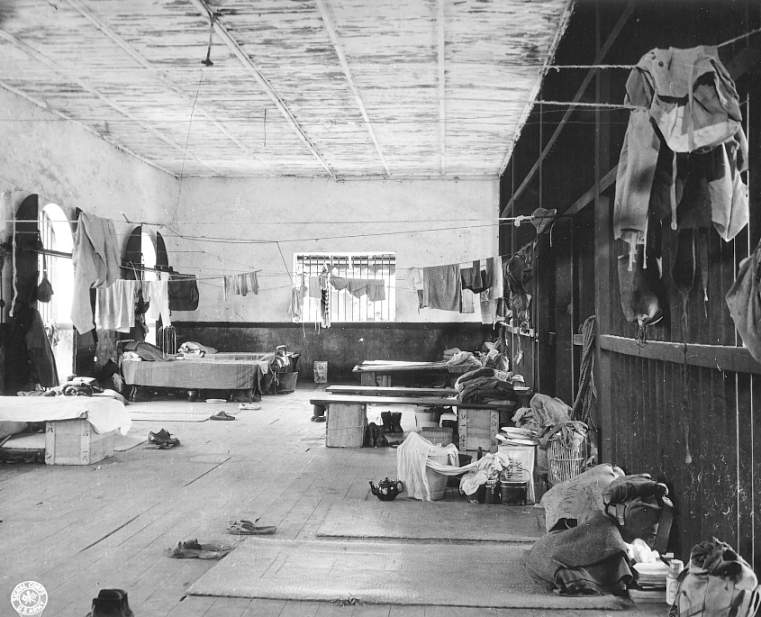
The hours passed slowly, with nothing to fill them but cards, played in groups, and the sharing of a cigarette rolled from cheroot tobacco in newspaper or whatever scrap of paper we could find.
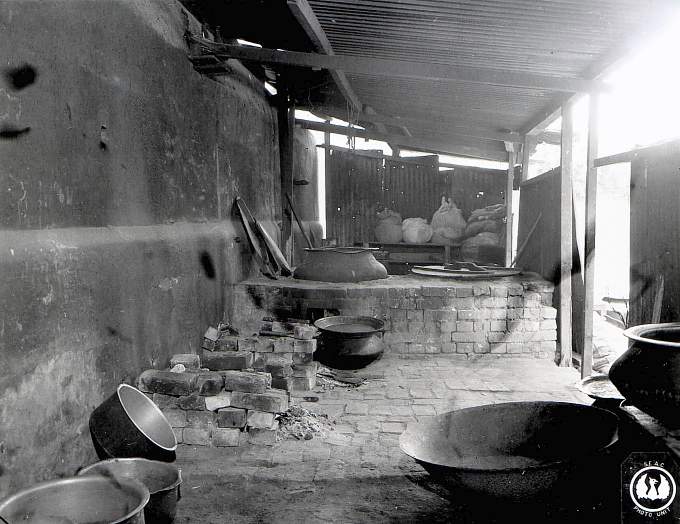
It was here that the book got its name. The Japanese flag had been a red semicircle with rays on a white ground; this was changed to a plain red disc on white, the rays gone. We called it the red chapatti — an insult to our captors, and a small thing to hold on to. It is the nickname I have given to this account.
Chapter Seven
The Early Days
In those first weeks one of our good friends, Laurie Scarborough, fell ill. The Japanese diagnosed tuberculosis, which frightened them enough to move him and four of us into an adjoining cell in isolation. After a week or so Laurie died.
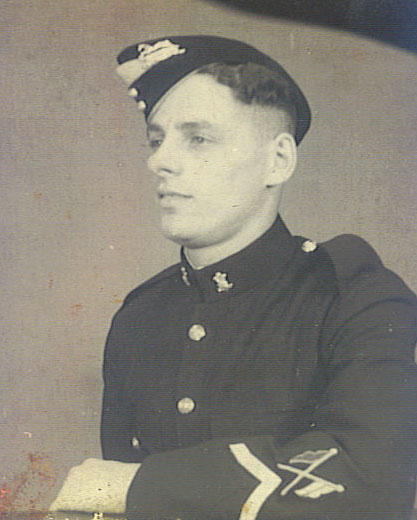
We had to carry him out of the jail to a field where a trench had been dug, filled with bamboo, and topped with a metal grille. We laid his body on it, doused the lot in petrol and set it alight. When it would not burn fast enough we were made to fetch bamboo poles and turn the body to hasten it. That has given me nightmares down the years, and no doubt did the same to the others who were there.
Not everything was so grim. One day the Japanese arrived with squares of white cloth, Japanese script around the edge and a large number in the centre, to be sewn onto our shorts for identification. The puzzle was which way up they should go. My own number, eleven, gave me a good laugh, for it was unmistakable however you held it: 11. The laugh cost me, for a guard came up and belted me, calling me bugaro — stupid — the Japanese eleven being written quite differently.
We had no doctor among us, but we felt we ought to have something like a medical room. The only man with any medical experience was a sergeant named Smeraldo, of Italian descent, who had changed his name to Esmerald for fear of how the Japanese might treat a man whose people were on the side of their allies. He would have nothing to do with a sick bay or anything resembling one.
A tank crew was brought in about this time, one of them with a broken ankle. We set it — entirely wrongly — so that his foot sat at about ninety degrees from where it should have been, and he was lame for the three years of his captivity, though the leg could surely be re-set once he got home. He had broken it leaping from his tank after a Molotov cocktail was thrown into it, and the wound was full of maggots; we picked them out, leaving a few behind to keep it clean.
Chapter Eight
Out on Working Parties
We were moved from No. 3 block to No. 6, which was to be our home for the next three years — though we never gave up the hope that we would be out by Christmas. Word came that we would soon be going out on working parties, and we welcomed it, for any change was better than the boredom of the cell.
One of the first jobs was to take down all the sandbags that had been built up around the doors and windows at the front of the jail. Much later, a party was marching out towards the gate when aircraft appeared overhead, just as the guard was being changed in the archway. A plane was hit, and we flung ourselves to the ground, at which the guards began to laugh — not for long, for the bombs we had heard coming exploded at the entrance and decimated them, leaving us untouched on the ground.
We were paid for this work — a penny or so a day at first. About thirty of us were sent one day to a local school and split into two groups, one of which I took charge of at the school while the other went into town with a Sergeant Major, each under a civilian Japanese overseer. When the town party rejoined us, the Sergeant Major told me their overseer had taken them to a café for a sit-down meal — while ours had left us all day with nothing to eat or drink. I said exactly what I thought of that, not noticing the civilian Jap standing near, an English-speaker who took in every word; he asked for the same party again the next day. This time a second Sergeant Major attached himself to us — his first and only venture outside the jail — and the whole party stayed at the school and was given a fabulous meal of curried beef and rice. My tirade, it seemed, had done some good.
Some of the parties I would have done without. Once we were sent to clear a bombed village, drawing the bodies from the rubble; it was a dreadful business, and when I pulled one body by the arm the skin slid away to the wrist in my hand. That, too, has stayed with me down the years. We marched out, as often as not, in the worst of the midday sun, kept to the main roads in our bare feet with the melting tar oozing up between our toes, until the soles of our feet were like leather. We went one day to the docks, a mile from the jail, to unload a ship carrying comforts for the Japanese troops: small bags of trifles fit for children, yo-yos and whistles and the like. One man found a tin of tomatoes in his bag, and after that everyone fell to opening bags in hope, with little luck, dumping the opened ones in the dock where, astonishingly, the floating heap went unnoticed. I was prising a packet of cigarettes from a part-nailed crate when a Japanese officer bellowed behind me; without turning I flicked the packet into a pile of rubbish, and talked my way out of it by saying I thought the loose lid ought to be nailed up. He had the whole crate carted off, and put me and a couple of others on the lorry to go with it.
A short while later the drone of an aircraft sounded in the distance. We told the guards it was English, and while they craned to look, the three of us helped ourselves to several packets of cigarettes. I hid four of them, one at each side of each ankle, held with a puttee. At the search I pulled some paper from my pocket and asked if I might keep it to make cigarettes; it was refused, and I was bashed, but he passed on without searching my legs.
The next day, clearing the same area, I pocketed a tablet of soap, gritty but better than nothing. A Japanese sergeant who spoke good English caught me, gave me a couple of hefty slaps, and told me I had no need of it, as we got plenty of soap and cigarettes in the jail. I denied it hotly, not knowing what punishment I was inviting — and to my surprise he believed me, went off, and came back with a packet of cigarettes to hand round the lads.
There were spells of heavier work. One lasted three days and nights, loading lead ingots: two men would lift one onto a shoulder, carry it up a plank to the open hold, and drop it in, twelve hours a shift. The job was well done — though not so well as the air force managed the day after, when the ship had moved out into the middle of the river and they bombed it, and down it went with all that weight. Another three days and nights we spent on a coal barge, shovelling coal into a ten-foot bucket to be hoisted out, standing barefoot on the coal itself. We came off each hour black from head to foot, but not for long, for the sweat soon carried the dust away. At midnight there was a rice-ball for our trouble.
Later still we were sent into the centre of Rangoon to deal with unexploded bombs, a task for which none of us had the least training. The first sat four feet down in two feet of water in the middle of the main road. I was sent to a nearby house to scrounge a bucket to bail it out, and found three Burmese ladies taking tea in the garden. As I bent to pick up the bucket my shorts — patched, and the patches patched again — gave up the ghost and split from top to bottom. After so long without the sight of a woman I fled, mortified, bucket in hand. In time we got the bomb out, loaded it on a lorry, and drove off like the clappers to drop it in the river. On the far side of the city another party was waiting by an unexploded bomb, one of the lads sitting on a metal object sticking out of the ground; he got up smartly when told it was the bomb, fins and all gone.
We tidied the railway marshalling yard too, which was bombed most Sundays, our day off; we would clear up after a raid and the bombers would come again and undo it all. We did not mind that job, for there was usually some loot to be had — once cigarettes, damp from the fire hoses, once sugar, also damp, which we hid in our water bottles. We were gaining a fine education for a life of crime, had any of us chosen to take it up.
Among the worst of the labour was the wood yard, shifting great lengths of teak onto lorries — heavy, dangerous work that took all our strength to lift and balance, and good coordination to drop and jump clear, the harder because by then our average weight was about six stone. And around the huts we were set to build blast walls some ten feet high. Jumping down from one at lunchtime, I fell forward onto a rusty six-inch nail standing up from a plank, and it went clean through my hand. A guard saw it, drew the nail out, fetched a little cooking oil from a village hut, dipped a length of hollow dried grass in it, set it alight, and poured the burning oil into the hole. I swore at him — the only time I ever did so without paying for it.
Chapter Nine
No Good San
Much of jail life turned on the guards, and on learning their moods. The man in charge of the Garden Party was named Noguichi-San, which we soon converted to No Good San. He would march us out to the garden, halt us, and dismiss us with a flourishing salute that we were obliged to return — and for that salute, among other things, he was also known as the Admiral. His manner was a comedy, though the man himself was no joke. One day I fell out of the ranks to light a cigarette with the sun and a magnifying glass; his shout of Nan da kurra! should have warned me, but before I could move he caught up a garden rake and brought it down on my head. I felt it.
Another time I was sent to do a tobacco errand for one of the officers, through Noguichi. We used the Burmese cheroots, broken up, to make cigarettes; the other local smoke was little more than chopped bamboo and no use to us. Noguichi brought the wrong sort, and when I tried to tell him so he aimed a kick at my groin. I turned aside, slipped a hand under his foot, and sat him down hard on his behind — then made myself scarce, and for some reason he never found me.
Punishments were handed out on a whim. The Admiral would decide that two men deserved it and set them facing each other to slap one another's faces; more often than not one would only pretend to slap while the other clapped his own hands together, and the pair of them got away with it. The whole Japanese system ran on it: a man was punished for anything a superior judged wrong, and rank was marked by stars — a red cloth oblong for the recruit, then a yellow star, a second, a third, a silver star, and so on up. We were at the very bottom of that ladder, and so had no chance at all.
Twice a day we stood for Tenko, the roll-call, numbering off in Japanese, which we learned soon enough. One day a Scottish regiment was counting, and when it came to seven — hichi — the Scot rendered it hechi, the nearest his tongue would go. The guard exploded, screamed bugaro at him and knocked him about; and when the same thing happened the next day, an Englishman was quietly drafted into the number-seven spot to spare them all.
There was a fine pantomime, too, the day an Irish Sergeant Major was given leave to drill his men, on condition the commands were in Japanese. I stayed to watch, certain it would be no ordinary parade, and I was not disappointed. His brogue was such that I could not follow his English, let alone his Japanese, and I doubt the squad could either. For the first minute all went well, the men marching smartly away from him — and then came his command to about-turn. The result was as if a bomb had dropped in the middle of the squad, a hole blown clean through the centre and the men marching off in four directions at once.
Hygiene was a watchword, at least in theory. Nogger, the chap who boiled our water — a task absolutely vital in that place — was a man of limited wits but perfectly suited to it. The Medical Officer caught a man dipping his can straight into the tank and admonished Nogger: this must not be allowed, we must think of hygiene at all times. When the next man came to dip his can, Nogger moved in, stopped him, and announced: "You are not allowed to do that. The Doctor has told me there has been an outbreak of hygiene, and we have to do everything to stop it."
The latrines were a long open building with rows of stone blocks and a munitions tin between each pair, emptied each day into fifty-gallon drums. Two men unfit for the working parties carried each drum slung from a bamboo pole on their shoulders, the man behind getting the worst of it as the liquid swirled and slopped. Solid stools were unheard of, until the day a chap came running out swearing that someone had produced one that stood up for itself. He was not believed until two more had gone in and confirmed it, whereupon most of the compound filed past and saluted the thing. An RAF officer finally owned up to being the cause, though he could not say how. The drums were emptied into a cement-lined pool that soon heaved with maggots and then with flies, which descended on the compound in clouds and settled on every dish, so that we ate with one hand forever passing over the food. On Sundays the Japanese would come with little bottles and fly-swats and make us fill the bottles with the flies we had killed.
Every Sunday, too, a few of us met under a big tree in the back compound, where an officer taught us Urdu. One by one the others dropped away until only he and I were left, and then one Sunday he sent word that he was ill and would not be coming, so there was no point in my attending. That illness saved my life. There was an air-raid, and our own aircraft came over with a mixed load of bombs. The first blew up a small cookhouse but left three men eight yards off untouched; I was in the passage of the building and went straight to the ground, and when I rose I could not see a yard for the whitewash hanging in the air. The next bomb demolished our tree — where, but for his illness, the two of us would have been sitting.
On another day I was coming back from the latrine, weak with dysentery, when the bombers came over. Halfway to the trench I heard the bombs whistling down; I dived in, and a brick struck the side just above my head. The same bomb fell on a slit trench and buried the men sheltering in it.
Even our captors went in for entertainment. They held a brass-band concert that we were all ordered to attend and to applaud after each piece, bored stiff as we were. One tune was catchy enough that a prisoner set our own words to it, which we sang on the march; the Japanese were quite pleased, and would have been a good deal less so had they understood what we were singing.
Chapter Ten
Making Do
Hunger sharpened the wits. Thanks to one of the officers we began to get spinach with our rice at tea-time; he had spotted it growing wild, cultivated it, saved the seed and ate none of it that first season, until in time it covered a whole field outside the jail. We grew sweet potatoes too — a plant unlike anything I had known, a cutting that rooted and then travelled along the ground, throwing down shoots that each grew a potato just beneath the soil. We learned to scratch the earth away, snap off the young potato, and tuck the shoot back so that all looked undisturbed. Eaten raw, it was a treat, nothing like the mature ones.
The cooking was a study in itself. The cook made cake of a kind by grinding rice between two stones into flour and binding it with dubbin — the foul-smelling grease meant for football boots — the cooking at least taking the worst of the taste and smell away. When the Japanese took a fancy to an English breakfast and asked our cooks to make one, the best they could manage was thin-sliced pork fried with eggs; the Japanese finished it off by smothering the lot in sugar, of which they had no shortage, half-filling their water bottles with it before topping up with water. The rice itself was often the sweepings of the store floor, rat droppings and broken glass and all. And there was the time a party sent to work in the Chinese compound came back having been given a stew with more meat in it than they had seen in all their captivity — shortly after which a guard came round looking for his dog, which was never found.
I learned, too, what truly fresh fish was, set to work one day in the cookhouse: a great vat filled with water, brought to the boil, and live fish dropped in to swim about until they were cooked. I do not think we expected anything kinder.
What little we earned we hoarded against a chance to buy a small change of diet. When the pay went up, another chap and I clubbed together for a tin of evaporated milk and put half each on our rice — but after two or three spoonfuls we had to give up; it was more than our shrunken stomachs could take.
Smuggling was its own art, and the searches varied with the sentry, so our hiding-places varied to match. I once carried two purloined eggs in my fundoshi, the loincloth under my shorts; had the "groper" been on duty he would have had a shock at my doubled equipment, but as luck had it he was not. Marching back through the archway one day, doing our version of the ceremonial step for the watching sentries, a tin of fruit dropped from one man's shorts; quick as thought the chap behind scooped it up and hid it before the search, and carried it safely in — only to be met by the first man wanting it back. He did not get it, for the second fellow had risked solitary and a beating not just for the fruit but to save his mate from the same.
Not every man behaved so well. One of the lads, sick in bed, decided to sell a spare shirt — clothing fetched wild prices in Burma — and asked a certain sergeant to sell it for him. I was on the same working party and heard the sergeant turn down a high offer, take the next, and hand the sick man a pittance, pocketing twenty times as much himself.
We made our own amusements where we could. Two Australians who had escaped a Japanese-held island by rowing for India, only to fetch up in the Rangoon river and be captured, joined us in the camp; one of them, a man of six foot three, lost a game of "do or dare" and had to stand stark naked on a stone plinth as Eros. The Japanese set up a sort of netball court and brought the heavy teak posts a mile from a local school for us to manhandle into place, then formed a team to play us — by rules of their own that were closer to rugby, while we were not allowed to tackle them at all.
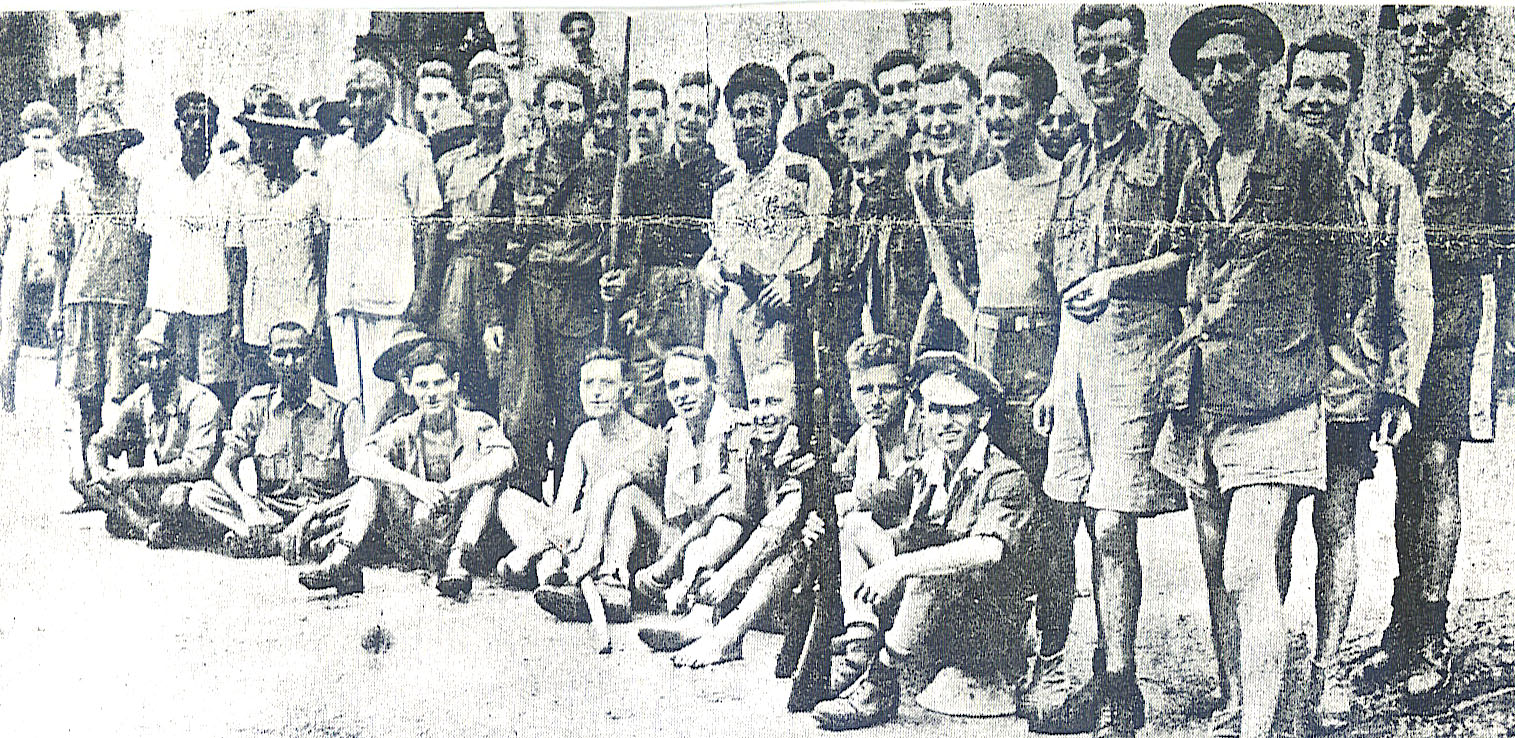
There were friendships, and the teasing that goes with them. My old friend Tom worked in the cookhouse and had to rise early to cook the breakfast rice. He kept his false teeth at night under a sheet of sacking by his wooden pillow, and one morning he came at me in a fury — "Come on, don't muck about, what have you done with my teeth?" None of us had them, but nothing we said would convince him, and the teeth became his one subject until everyone was sick of it. At last another cook, worn down by the wailing, shouted that the rats had had them — and Tom, desperate, began searching the rat-holes in the cookhouse floor, and, surprise of surprises, found them, washed them in cold water, and had them back in his mouth within minutes. He never did apologise to me.
Tom drew a second ribbing later, when he grew friendly with another chap to whom he passed his extra cook's rations. The others decided, as a joke, to marry them: one wore a clerical collar, Tom's pal was wheeled in on a barrow, and amid much hilarity the ceremony was performed. The cooks did well for themselves in other ways too — extra and better food, some of it passed to favoured mates and, it was whispered, to certain officers, which perhaps explained why the cook-in-charge and two others were made up to sergeant, swelling the back pay they drew on return. One officer was grateful enough to buy that cook a small café in England afterwards.
As the war wore on, the Japanese put more of us to concealment and construction. We cleared forests and built bamboo bashas; we cleared a whole plantation of pineapples, hundreds of them thrown away and wasted. One Yank sat up night after night trying to catch a bullfrog we could hear calling, for the pot, and never did. An officer planted the seeds of a papaya he had got on a working party; three came up, but only the female bore fruit, and there was never enough of it to matter. There was building, too, of the rougher kind. We patched the jail with the Japanese notion of mortar — soil mixed with quicklime and water, trodden by our bare feet, which it burned raw. When a bomb breached the great prison wall we built it up again, two brick skins with nine feet of that mortar packed between, hours upon hours of labour — and then the heavy rains came while it was still wet, and the whole of it collapsed. We made a bomb-proof shelter, too, of the cell block's two floors, carrying bricks six at a time on our heads up to the second storey to drop into the ground floor below until it was filled. Through all of it our talk turned, and turned again, to which regiment would be the one to set us free — for it was well past the Christmas by which we had first sworn we would be home.
Chapter Eleven
The Mechanics' Camp
I had become friendly with a six-foot Sub-Conductor of the Ordnance Corps, and one day he told me he had put me down for a party of thirty to go and live in a Japanese camp some miles off, to maintain and repair army vehicles. When I protested that I was wholly unsuitable — I could not even drive, and knew nothing of machinery — he said that made me perfect for it: all the more likely to do the vehicles harm.
As it turned out, I was put in charge of six men re-treading tyres, and here a little knowledge served me well, for my work at home had been in a rubber factory. It was hard labour, cruel on the arms. We cut the old tread off with a great knife, rasped the tyre down to the canvas with a tool of wood, sheet metal and gramophone needles, coated it and a length of uncured rubber with solution, hammered the new rubber on with a heavy wooden stake, and baked the tyre in a section of mould over a wood fire — a primitive business that left us covered head to foot in rubber raspings.
It was a business that could be quietly spoiled, too. I suggested to the lads that a little water dabbed on the tyre before the rubber went on would turn to steam and stop the two from bonding. We managed it many times, but never better than the day an Indian driver and his mate brought in four tyres needed for the morning. We treated all four, and all four came from the mould blistered with trapped steam; a little Japanese — not a bad fellow, for a Jap — pricked the blisters to let the air out, and the tyres went off north at first light. Later that same day the two Indians came trudging back, carrying four tyres and four treads between them: they had braked once, and the treads had parted company with the tyres. A very satisfactory result.
Other men fared worse at their work. In the next hut a few prisoners made lead battery plates, pouring molten lead into moulds; the metal dripped through onto the bare feet of the men below, and burned them terribly. And the camp had its absurdities. One of our first jobs there was to put up a bamboo fence around our hut; a few weeks later our sergeant and I — the only two with any scrap of the language — were told to take it down again, and had it almost down when an officer appeared, gave the guard a dressing-down, and the guard at once blamed the pair of us. The men, who had to build and unbuild it, were not best pleased with our interpreting.
There were small mercies. After a stint at the tyres we would go to a well in the jungle to wash off the rubber, and once I hauled up a bucket and tipped it over my head to find myself covered in leeches; the lads got them off by touching them with the tobacco of a Burmese cheroot — there is no need, whatever the books say, to light the cigarette first. We got a weekly treat of sweet Indian tea and a Japanese sweetmeat, a rice cake with a paste inside, the nearest thing to an Eccles cake I can describe; nothing I would relish at home, but a delicacy there. And near the tyre hut was a small Pakistani village, one of whose people would now and then risk a great deal to bring us a little food. Had it been in my power, when the Japanese were beaten, I would have liked to reward that man for what he did for us.
It was while I was here that I tried again to get a doctor for the swelling on my neck, with no luck — until a number of white-coated Japanese came into the compound. One of them had me wait, lined up beside three or four others, while a table of instruments and medicines was set out, and we were vaccinated and inoculated several times over and sent away. They came back a fortnight later to see whether we were still alive. We had been their guinea-pigs, used to test medical stores the British had left behind in Rangoon.
That was of a piece with much we now noticed. The Japanese had begun to behave like men expecting an early end to the war. The plainest sign of it was the day a great many of us were taken to a local high school, Myoma, and set first to digging a square pit in the middle of the football field, then to laying teak beams across it in crossed layers, and then to carrying basket after basket of soil, coolie-fashion on the head, until the whole playing field was built up to the height of a three- or four-storey house. We laboured at it for weeks, on into the monsoon, the ground turning to mud; when an officer arrived unseen and the guard failed to call us to attention, the guard was made to crawl to him through the length of that mud. I was taken off the soil to help a so-called joiner nail three planks into a right-angled triangle, to set the uprights of the blast walls true — but the fool would not see, though I told him often, that we were working on sloping ground, so the uprights stood at ninety degrees to the slope. Half a dozen went up, more and more obviously wrong, until an officer came, took one look, screamed bugaro at the guard and belted him. The officer left; I was stood to attention and belted in my turn. I was lucky often enough — but not that day.
Chapter Twelve
The Sick
We went without proper medical help for a long time. One day a number of British prisoners, weeks of beard and hair on them and many plainly ill, were brought into our old No. 3 block; about then a Medical Officer of high rank reached our block and another doctor came to No. 3, so that things seemed to look up — though still we had almost no medical supplies, and the doctors had to work with whatever a working party could find.
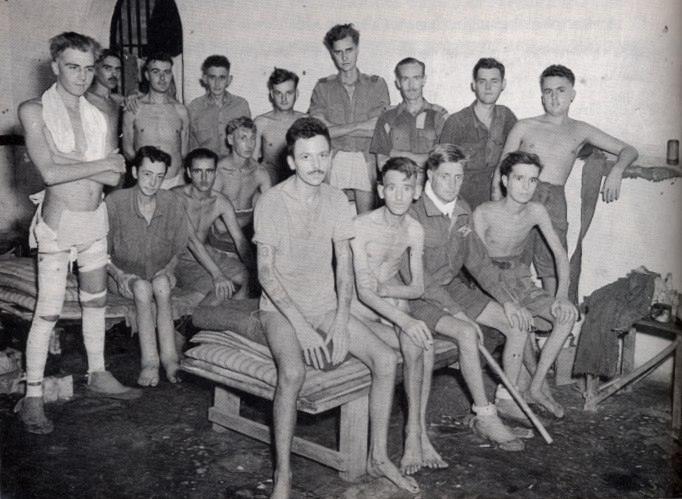
The diseases were many, and some of them strange. Beriberi was everywhere, bred of a diet of nothing but boiled rice and the vitamins it lacked. Malaria came from the mosquitoes, and the worst cases died, often after terrible nightmares; and where malaria and dysentery took a man together, there was little hope for him. Dysentery I knew at first hand, as did my good friend Harry. The only treatment was starvation — ten days or so of it, then rice water, then after a week a little rice. At night Harry and I had to make our way in pitch darkness to the toilets at the far end of the block, and to keep from colliding we would call out as we passed, "Coming out, right" and "Coming in, right." Between us we lost about six stone in weight in that time, and never got it back while we were in the jail.
Ringworm covered poor Nogger, the water-boiler, from head to foot. Jungle sores could start from a scratch and then eat into the flesh — in one man I remember, into the stomach, so that you could see right inside him. The only thing the doctor had for them was copper sulphate, the bluestone used on horses' sores; when a man on a working party found some crystals of it, the doctor was overjoyed and begged for all that could be brought. Many men suffered, too, from blistered, weeping testicles, the itching past bearing, and one was so tormented that he dabbed the copper sulphate on himself — it bit like acid, and he ran for the water tap in the compound and turned it full on, trying to wash the agony away.
Worst of all, for me, was strongyloides — a worm that entered through the bare soles of our feet, lodged behind the stomach wall, and travelled the body causing an itch worse than anything I have known. I carried it for thirty years. My own doctor at home took it for urticaria, brought on by food or nerves, and since my diet did not change it was put down to nerves, so that for years I believed myself a nervous case. Only when I applied for a pension did a copy of a 1945 report from the York Military Hospital come to light, showing that strongyloides had been diagnosed even then and never passed on; at the Tropical Diseases Hospital in Liverpool it was cured at last in under a week. The Medical Officer recommended a gratuity, which was refused. Now and again the "family" behind my stomach wall would set off on a tour of my body, and the itching would return; once, wearing the string vests that were all the fashion, I found myself covered in little bumps, one at every hole of the vest, and gave the vests to my brother-in-law.
There were stranger afflictions still. We called one "Happy Feet" — and I have since read the same name used in other camps, which I always thought odd — where the nerve-endings in the soles jumped so that a man could not keep his feet on the ground; a friend of mine had it so badly that on the march to freedom he had to hang on to me, unable to bear his feet down at all. A party of Javanese troops in green uniforms was brought in and began dying from the first, loaded onto lorries and taken away to be buried, until none were left; we never learned what was wrong with them, or where the rest were taken. Prickly heat came in two kinds, the dry a fierce itch from the sun, the wet a crop of blisters. And there were crab lice, small crab-like things that buried their claws in the skin, leaving only a black speck showing, and that nothing but methylated spirits would shift — and we had none.
The doctors did extraordinary things with nothing. In the next compound were Chinese prisoners, and when two of them fought and a Chinese general stepped in to part them, one stabbed him in the stomach. They chose our doctor to operate, which he did in the rough, with a scalpel found on a working party and sharpened on a cement step, and no anaesthetic at all; the general bore it bravely, but died later. Another time our doctor amputated a British prisoner's leg, with ice for the only anaesthetic — and that man lived.
Then there was cholera, which terrified everyone, the Japanese most of all. The sick were moved to an isolation block, tended by a few very brave volunteers, and the rest of us inoculated. I came in from a working party of thirty to be lined up at once for the needle — the same needle that had already done a hundred and fifty men or more, and I was the very last of them. I felt it. Some died even so, but the outbreak was halted.
My own long trouble was a swelling on the neck that, for five or six weeks, all but closed my throat, so that I could neither turn my head nor swallow. In the end, in desperation, I drove the sharp end of a pair of tweezers into it and got some relief when a great deal of pus came away; for days after I drew more off with poultices of hot rice. I think of it still when I eat a poppadom, for in those weeks my food was a chapatti of flour-and-water paste, rolled paper-thin and cooked on the hot-plate, and it took me a whole morning to get one down; I could not drink properly either, but had to take water into my mouth and let it trickle slowly back. I never did learn what it was, or what had caused it.
Chapter Thirteen
The Hospital and the Condemned Cells
The hospital cell was busy from the day it opened. Beriberi filled it, bred of the rice diet; dysentery was everywhere, though it did not always need a bed; and there was malaria. One man seemed to have no grave illness at all, yet faded and died calling for his wife — heartbreak, as near as any of us could tell. Another died struggling to work the rings off his fingers. A man from Leeds lay for weeks on his back, his legs forced apart, unable to close them because beriberi had swollen his testicles nearly to the size of a football; a civilian doctor from the Andaman Islands, imprisoned with us, drained the fluid off and kept him going, until the doctor and his fellows were moved elsewhere in Burma, and the man died for want of him. But another, left unable to walk by beriberi, hauled himself upright on the wooden bars of the cell and forced his legs to work, week after week, until he could take a few steps, and then a few more, mending all the time. In a place like that, such a thing was a kind of victory.
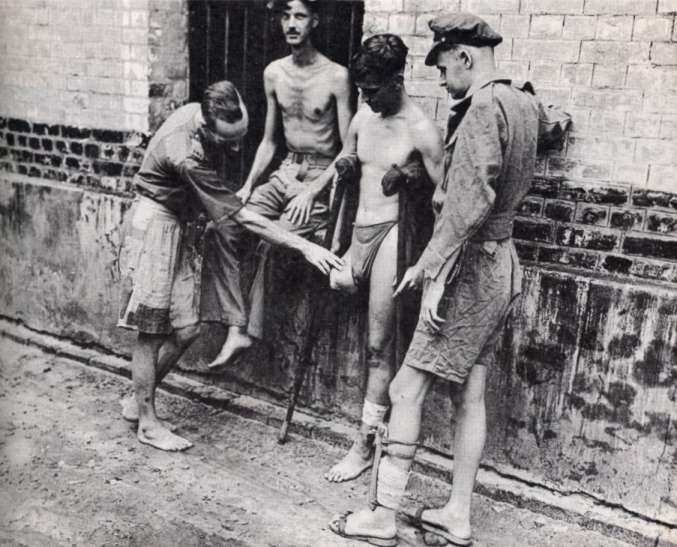
Not all the suffering was the work of disease. One Sunday the Japanese made us file past two of their men at a table with pens and paper. Tom was ahead of me, and when they saw his number they waved him away; suspecting something, I slipped off to the toilets. About thirty men were chosen, and it came out later that they were to be guinea-pigs in an attempt to isolate the dengue germ — Tom had been turned away because he had already done it once before, with another of our pals. The chosen men were taken to a separate block, infected, and then given far better treatment than the rest of us: superior rations, mosquito nets, blankets. They were kept on it a long time, and when at last they came back to us and to the old poor diet, many could not cope with the change, fell ill, and died.
Near the entrance stood a line of single cells, the condemned cells of the old civilian jail, with the gallows at one end. In some of them the Japanese set up what we called the candle factory, where prisoners made candles for cooking in the field. In another lived the only woman prisoner and her children — a British lady who, I understand, went home afterwards and wrote a book. And in another was a Russian we nicknamed Joe, after Stalin, who wore a magnificent beard until the day he got hold of a razor and set about shaving it off; he had done one half of his face when a guard burst in and took the razor, and left him so — half-bearded, half-shaved.
Chapter Fourteen
The Cruellest Blow
Of all the cruelties — and there were many — one stands apart in my mind, because it was not done to the body. The camp's status was changed from a field prison to a proper prison camp, and when the interpreter and the senior Japanese officer came to tell us so, they added that this meant they would now begin notifying our next of kin. At that, every man was ecstatic; our families had been left in silence since our capture, and the not-knowing had been, I had always thought, the worst thing they had done to us. Then came the rest of it. The notifying would be done methodically, they said — one prisoner each month, beginning with Captain Atkinson, and so on down. There were some two hundred of us. It would take many years. To raise a man's hope like that and then dash it so deliberately was as bad as anything they ever did, and it was a long time before any of us climbed back out of the misery of it.
The officers came in for particular brutality, for reasons of their own; more than once they were beaten and then made to face one another and beat each other. After one raid that killed a guard, an officer remarked to a Japanese corporal that yesterday's bombing had been very, very good — not knowing the corporal's closest friend had died in it. For weeks afterwards the corporal would send for that captain, stand him to attention, and slap him again and again.
There was a young Irishman who had lately lost his twin brother. On a working party a powerful Japanese, skilled in his martial arts, singled him out and threw him about without let-up until the lunch break, and then again until the end of the day — some ten hours of it. The lad came back to camp with his mind gone, and for fear of what the Japanese might do we kept it secret. But at Tenko one day he broke from the back rank, marched out to the camp commandant shouting "I want a word with you," and his cover was blown. They put him in solitary under a big Korean guard. When a plate of rice was handed in to him he carried it to the latrine tin, tipped the contents onto the plate, and — the guard watching at the bars, expecting him to eat — flung the lot in the man's face. When the prisoners were freed he boarded the hospital ship for Calcutta and would not be dressed, walking everywhere naked. I doubt he ever found his mind again.
Death could come in an instant, and from nothing. We were carried to a distant working party one day on a short-sided lorry, the whole party standing, holding to one another to stay aboard. Coming back after the day's work, still clinging on, one man let go and was thrown into the path of a following vehicle, which ran over him. He was past recognising, and was known only by the distinctive cap he wore — until we reached camp and were met by the very chap who had lent him that cap, alive and well.
Chapter Fifteen
Liberation
After more than three years in Rangoon Jail we were brought out one day to load hand-carts with rice and sundries and leave them by the gate. The next morning all the men judged fit were marched out, taking the carts with us, towards Pegu — back towards the country where we had been taken in the first place. We had been issued with Japanese boots before we set off, but I, like many others, soon threw mine away; after so long barefoot we simply could not wear them.
On the second day our own fighters came down on us, and we scrambled off the road into the trees. I dived into a hedge, and when the planes had gone I came out with blood streaming down my forehead; everyone thought I had been hit, but I had only chosen a bramble bush. After that the Japanese moved us by night and lay up by day. We learned now that they meant to take us on into Thailand, to work as coolies. But the roads were being mined, and our aircraft were over us often, and we understood from both that our own forces could not be far off.
We halted for the day in a large clearing ringed with trees and hedges, hungry, having had nothing to eat for two or three days. The Japanese posted armed guards and then called a meeting, the Brigadier who had commanded us through the jail among them. I overheard two sub-conductors — one an Anglo-Burmese, one an Indian — talking of making a break for the Chin Hills, and asked to join them, and was taken in. But it never came to that, for the Brigadier came back to tell us the Japanese had simply gone, knowing they had no hope of getting clear with us in tow.
Some RAF men went round collecting anything red, white or blue, and in the next field laid out a message marking us as ex-prisoners of war, and ringed it to warn the aircraft off. The reply was a swoop with guns blazing; happily they were poor marksmen, and no one was hit. Then, taken for Japanese still, we were bombed and shelled by fighter-bombers. A line of us lay down behind a very big tree, and I, being last of the ten, thought a bomb crater would be safer and set off to reach one, going to ground in a hedge as the machine-gunning came in, certain each round had just missed me. When it was over, the only man killed was the Brigadier — a bitter thing, after all the years he had done his best for us.
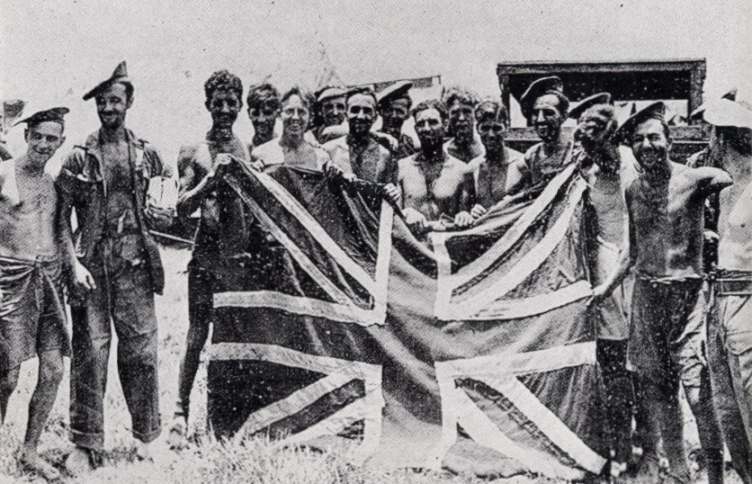
We scattered. Half a dozen of us reached a native village and were taken into a house on stilts and given welcome food; soon a Burmese came in to warn us to keep quiet, for there were Japanese in the space beneath. The Burmese had changed entirely towards us — they had had enough of the Japanese, and were on our side now. Before long a British ex-prisoner came to say that an American officer had made contact with our troops, and that we were to meet paratroops a mile off. We set out in the half-dark and met them as night fell — big African paratroopers. There is no describing what we felt. They put us aboard open lorries and we drove off, passing a field where Japanese lay dead to the last man behind their machine guns.
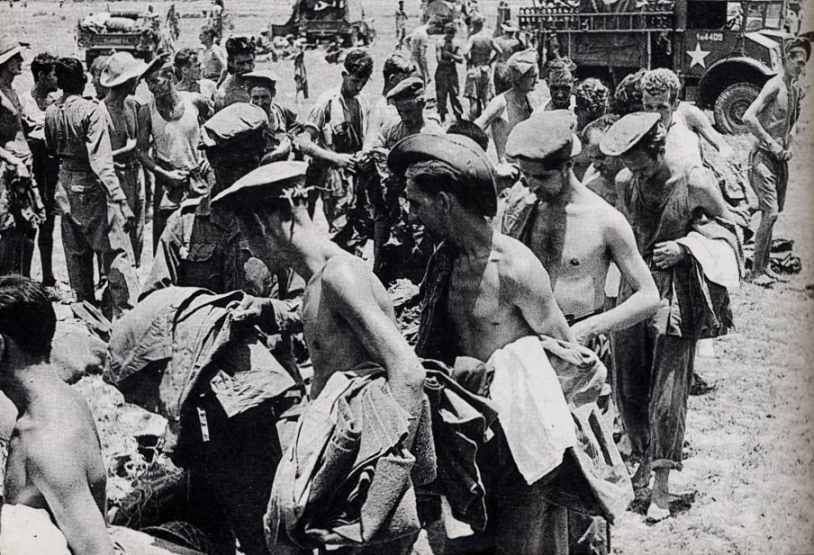
We were freed on the 29th of April 1945, the day before my father's birthday. The cook of the West Yorkshire Regiment brewed Indian tea laced with whisky — a very welcome drink — and, short of decent clothing as we were, the men of the battalion gave us some of their own kit to cover us. Later I met one of those young soldiers again, and he told me the regiment had charged them for the replacement of it.
For it was our own battalion, the 1st West Yorkshires, to whom the African paras handed us. Their Regimental Sergeant Major had once been Sergeant Major of one of the companies, and when he saw one of his old company standing there in nothing but a worn pair of shorts, ribs showing, wasted like the rest of us, he took the man into his arms and wept. Soon after, a sergeant reported that they had wounded a Japanese sniper who was dying slowly, and asked what to do with him. "After what I have seen," said the RSM, "let the beggar die slowly."
Chapter Sixteen
The Long Way Home
Twenty-five of us were gathered at a prepared landing strip, to be flown to Chittagong and then on towards Poona and a rehabilitation centre, where we were to be built up before the journey home.
The aircraft was a twenty-five-seat Dakota, and I was the last aboard, to find one seat already taken up with luggage; so I sat on the floor, facing the doors. It was stifling, and the Canadian crew took the doors off altogether, which left me looking out into the night sky — pleasant enough, until near Akyab, just off the Burma coast, an engine failed and the pilot banked steeply to circle and land at the airport there, beside the hospital. Now I was looking straight down through the open doorway, and I began to slide towards it; in a panic I threw a hand behind me and caught a strut just in time. Once again I had been lucky that the walls were not upholstered, with nothing to hold.
We came down at Akyab and were met by one of the medical staff from the hospital next door. When the pilot told her we were Japanese prisoners of war, she looked at my face and said I did not look much like a Jap — and was soon put right. The Red Cross there could not do enough for us, the more so when they found we had not had a single Red Cross parcel in three and a quarter years; they pressed hundreds of cigarettes on us, and all manner of things we had gone without for years. One of our own, newly freed, we found chatting at the bedside of a wounded Japanese, arranging to write to him after the war. We thought him very strange, and let it be.
From Akyab we were flown on to Deolali, hospitalised but not confined to bed, issued with a hundred cigarettes every couple of days and two pints of beer a day, with extra on VE Day, while we tried to put back some weight and strength — with a little success. Behind us, the sick men who had been left for the Japanese to abandon had climbed onto the roof of the main building and painted "JAPS GONE" across it for the aircraft to read; and aircraft came over, dropping the food and supplies we needed so badly.
Tom and twenty-four others left for India in another Dakota. A few miles out, a handful of Japanese opened fire on the plane and the pilot threw it into a dive; a young officer near the front fainted clean away, and everyone thought he and the aircraft had been hit. Later, offered the choice of a quick flight home or a longer passage by ship, all twenty-five chose the ship — and so I reached York some three weeks ahead of Tom, and was, I believe, very likely the first ex-prisoner of the Japanese to come home to the city.
Chapter Seventeen
Coming Home
Back in England we were de-briefed alongside prisoners from other theatres of war. Our interviews were noticeably short; the men freed by the Russians, we noticed, were questioned at length about how they had been treated. It seemed more trouble was expected from that quarter — and so, in time, it proved, in the long Cold War that followed.
During my interview I was asked whether I wished to claim for personal things the Japanese had taken — and there had been three gifts, given me in England five years and more before: a signet ring, a good fountain pen, a cigarette case. I claimed ten pounds to replace them, and was sent five, that being the limit, I was told, without receipts. Whether they meant receipts from the Japanese who took the things, or from a shop five years gone, I never discovered.
Soon after I got home I was admitted to the York Military Hospital. One morning a nurse turned back my sheet and found what she took for a piece of leather; it was the sole of my foot, which had come away — left like leather by all those barefoot miles on the melting tar.
The army had its own ideas of a welcome. The battalion's paymaster was housed in the Rowntree's chocolate factory in York, and when Tom and I went to draw some pay I gave my name as Corporal Troughton — only to be told they had a Private Troughton on their list, and that I had been reduced to the ranks under a rule that demoted prisoners of war six weeks after their return to England. And the three years' pay that had accumulated while I was captive, and was now paid out, the taxman fell upon, deducting tax for the whole period — though, paid properly at the time, I should have paid none. When I queried it, I was told only that I was lucky to be married, or I should have paid a great deal more.
The world had moved on without us, and we did not always fit back into it easily. Four of us who had been prisoners would meet for a quiet drink, and one evening, in a lounge bar empty but for a little old lady over a half of Guinness, we fell to talking of life in the jail — at which she finished her drink in a hurry and was gone. It dawned on us afterwards: she had taken us for criminals just out of prison. Beer itself was scarce, the pubs opening for an hour and then shutting, so that we learned to order four pints apiece and sit sixteen on the table at once. Very early on I walked into a pub, ordered a pint and twenty cigarettes, put down half a crown and waited for my change — and got a shock when I was asked for more, both having gone up a great deal while I was away. We could not seem to fill ourselves: a couple of hours in the pub, then the fish-and-chip shop, then back to the pub, and supper after that at home. Years later I saw the same thing in the displaced persons who came over after being worked half to death by the Germans.
Once, at a function in the drill hall in York, Field Marshal Slim came along the ranks talking to each of us, and to the four of us about Burma. One of the lads said they had been a long time getting down to us; Slim's reply was that they had caught the Japanese camp commandant at last, and hanged him.
There was a harder homecoming waiting, too. Before I went away I had been engaged to a young woman in York, and through all my five years abroad she had visited my family and waited, not knowing whether I was alive or dead, with only the War Office "missing" to go on. When I got home my mother told me she had married, just three months before. And after so long without the company of women I hardly knew how to be near them; walking down the main street in York, if a woman came towards me I would stop and study a shop window until she had passed. Two or three pints, I found, helped to mend the difficulty — and perhaps I should have gone to one of the rehabilitation centres, to get used again to an England much changed from the one I had left in 1939.
In time I met a young WAAF, and introduced Tom to her friend, and the four of us went about together. I married a few months later, and Tom was my best man; the reception was held in a café — the very café an officer had bought for another Rangoon man who had looked after him in the camp. Later Tom married in his turn, and I was his.
Chapter Eighteen
After
My wife and I soon had a child, a girl, and took her to the local church to be christened. There on the wall was a Roll of Honour — and my own name was on it, among the dead. We pointed it out, and had it erased.
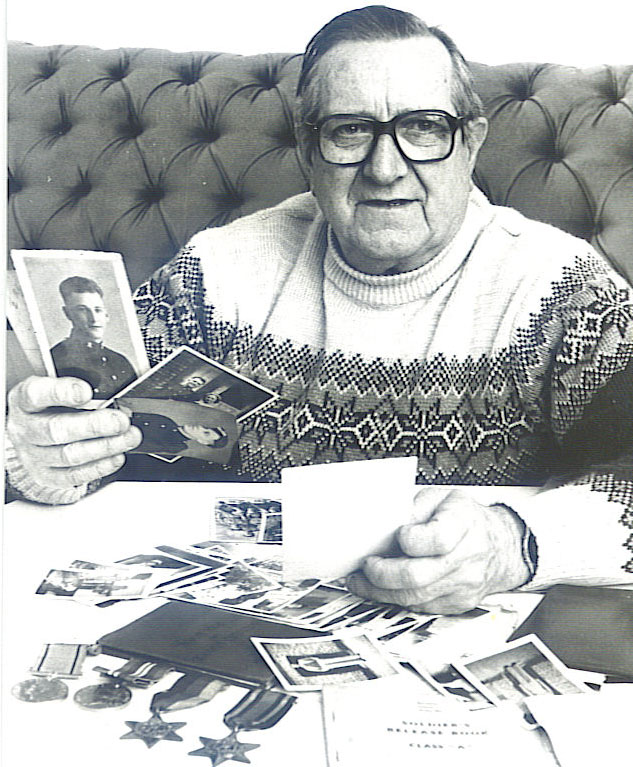
The war did not let go so easily as that. Some thirty years after I came home, my second wife Lorna and I were on holiday at a hotel abroad, and as we sat in the restaurant I saw three Japanese come in, single file. Whatever crossed my face, Lorna had me change places with her so that I sat with my back to them. Thirty years on, I still could not bear the sight.
For the last dozen years or so I have gone two or three times a year, a fortnight at a time, to a Combat Stress home, and they have done wonders for me — counselling, therapy, and above all the relaxation sessions. It was they who encouraged me to set my memories down, and so to make this book. I have been taken out, too, by the Not Forgotten Association, on trips along the canal and once to a Garden Party at Buckingham Palace.
The friends who shared it have mostly gone now. Tom and I drifted apart in the end, more from distance than anything, but I have missed him sorely since his death a few years ago; Harry, who is in these pages too, died the year before. Of those of us from the York area who were held in Rangoon, I seem to be the only one left.
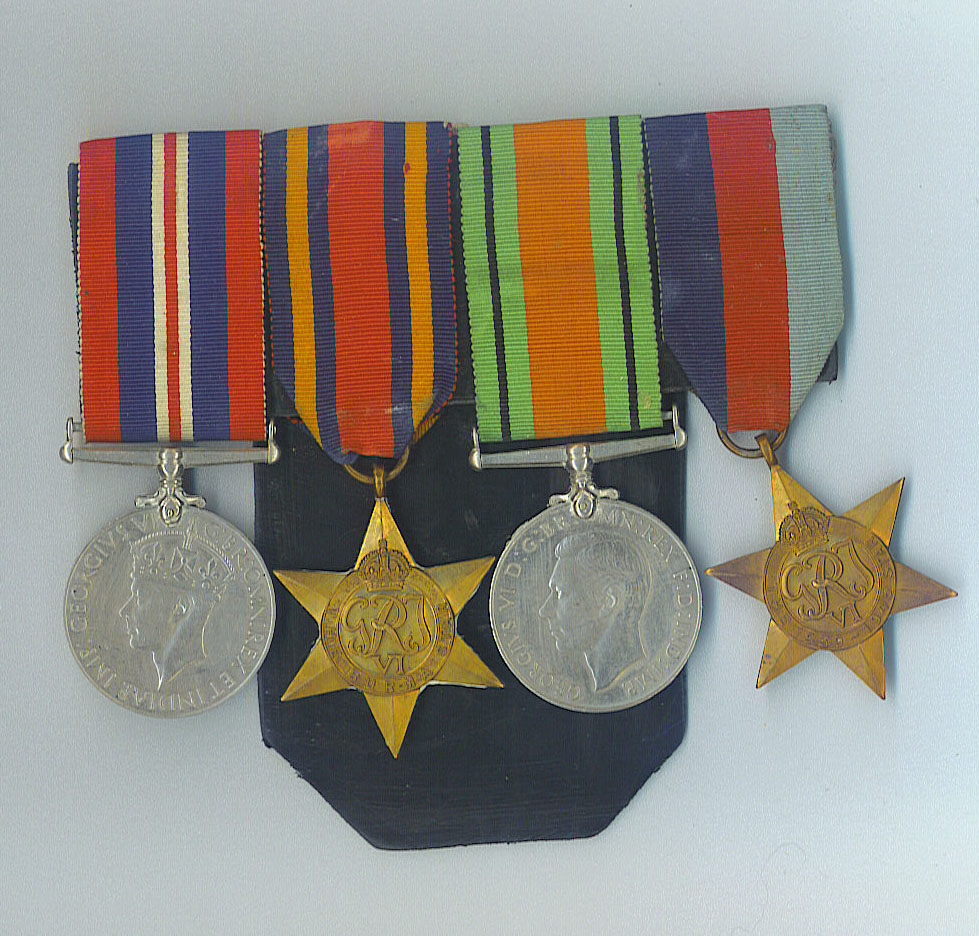
Of all I brought home and kept, one thing I have looked at more than most — a letter that reached us in September 1945, when we had only just got back.
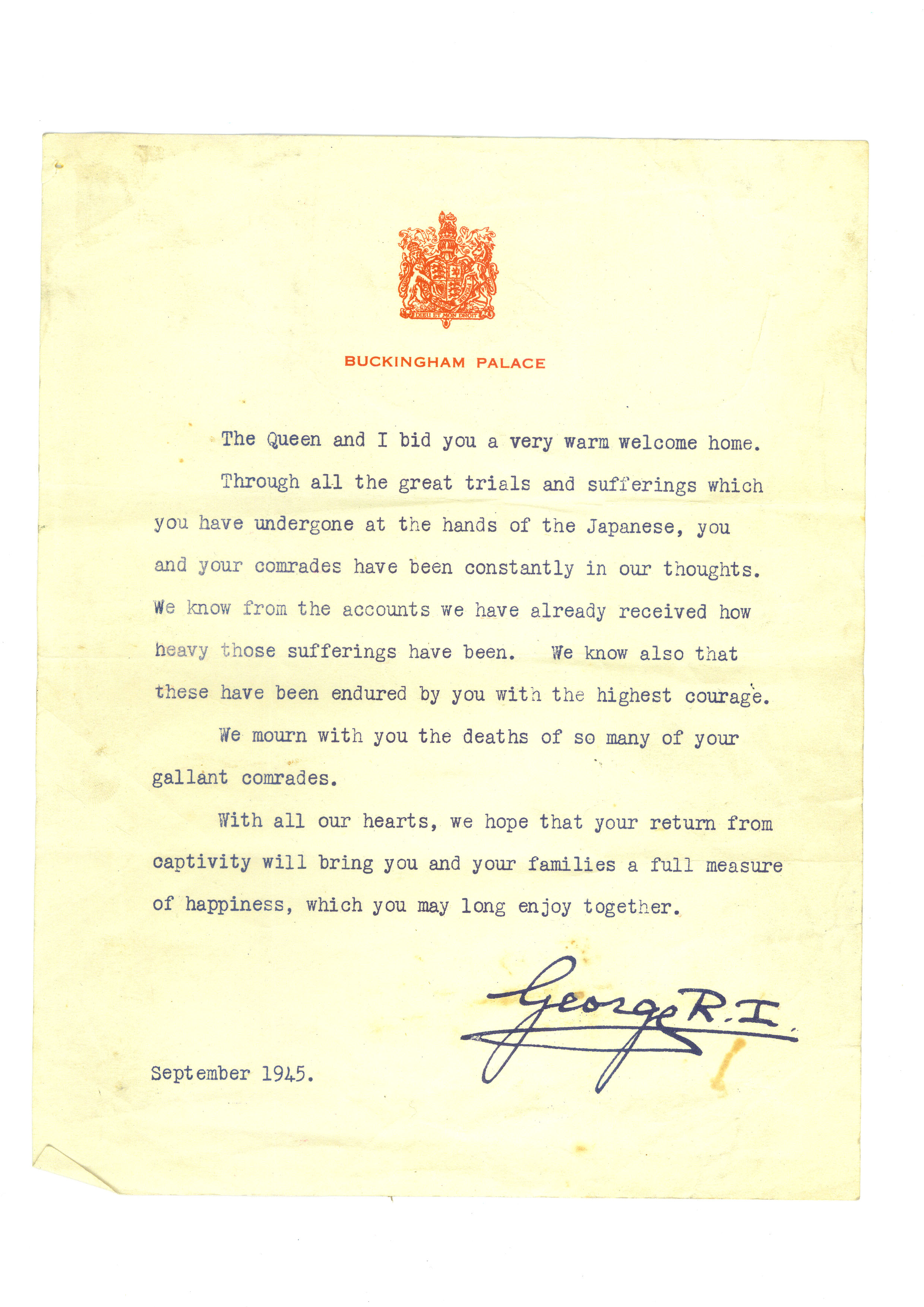
The Queen and I bid you a very warm welcome home. We mourn with you the deaths of so many of your gallant comrades.
I would like to thank all my family and friends for their help and encouragement in this work — my wife Lorna, my sons Michael and Robert, my daughters Sheila and Kathleen, and my good friend Wendy. Without them I could not have finished it.