A Prisoner of War in Rangoon
Surviving the Red Chapatti
The wartime memoir of Bill Troughton
A young man from County Durham — posted “missing” in Burma in 1942, and held in Rangoon Jail for more than three years before he came home to set it all down in his own hand.
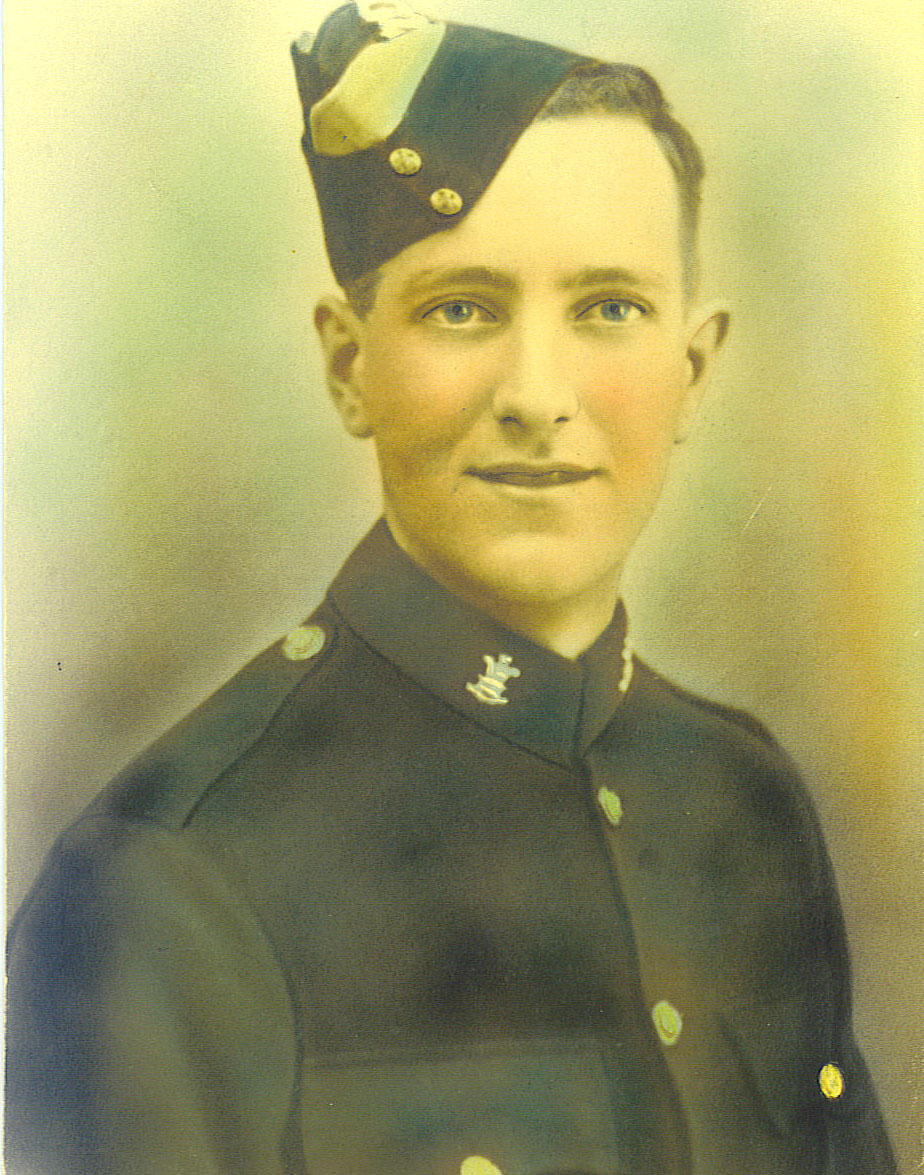
March 1942 – May 1945
For three years, his family did not know whether he was alive.
In the spring of 1942 a War Office letter reached the Troughton family home in Shildon, County Durham. It said only that Corporal William Troughton had been posted “missing” in Burma.
It did not say whether he had been taken prisoner or killed. Then nothing came — for more than three years.
Not until May 1945 did a second letter arrive, to tell his mother and father what they had almost stopped letting themselves hope for: he was alive, and in Allied hands.
March 1942
May 1945
More than three years of silence separate these two letters.
We were eventually freed on the 29th April 1945 — the day before my father’s birthday.Bill Troughton, on the day of his liberation
Bill Troughton was born in Shildon, County Durham, in 1918. Called up in 1939, he was sent with the West Yorkshire Regiment to India and then to Burma, where in the spring of 1942 he was overrun, captured, and held in Rangoon Jail for more than three years.
Late in his life, encouraged by the carers at a Combat Stress home, he set his memories down on paper. He gave the account a title drawn from a small act of defiance: the prisoners nicknamed the Japanese flag — a red disc on white — the “red chapatti.”
I would like to thank all my family and friends for their help and encouragement in this project. I wish to give special thanks to my wife Lorna, sons Michael and Robert, daughters Sheila and Kathleen, and good friend Wendy. Without their help I could not have completed this work.
Two ways to read
Choose how you would like to begin
Bill's Manuscript
Exactly as he wrote it.
Bill's account as he set it down: his own words, in the order the memories came back to him. This is the record.
Read the manuscript → Set in order for readingThe Reading Edition
The same story, retold in order.
The same events arranged into the order they happened and divided into chapters, with the wording eased and joined up for reading straight through. It is a retelling, not a transcript.
Read the edition →Bill's manuscript is his own words. The Reading Edition follows the same events in the order they happened, but the wording has been smoothed and linked together by his family to make it read continuously. Where the two differ, the manuscript is the record.
If this has stirred something up
Where to turn
Combat Stress operates a free, confidential Helpline that can be reached at any time, from anywhere, by phone or text, whether you're currently serving, have served or are a family member or loved one. If you're a veteran struggling with your mental health — experiencing flashbacks, difficulty sleeping, feeling on edge, emotionally numb, or avoiding certain situations — these could be signs of PTSD. You are not alone.
Our free, confidential Helpline is available 24/7 and can be used by all those in the Armed Forces community including veterans, serving personnel and their families. Please reach out, we're here to listen and help.
0800 138 1619 24 hours a day, every day
helpline@combatstress.org.uk by email
07537 173 683 by text
Please note that standard text message rates may apply.
In Bill's memory
In support of Combat Stress
Combat Stress — the UK's charity for veterans' mental health — helped Bill through the long years after the war, and it was the carers there who encouraged him to set down the memories that became this book.
When he first published Surviving the Red Chapatti, Bill had a small run of around 250 copies printed and gave all of the proceeds to Combat Stress. In that same spirit, if his story has meant something to you, please consider supporting their work.
Visit Combat Stress →