Chapter Sixteen
The Long Way Home
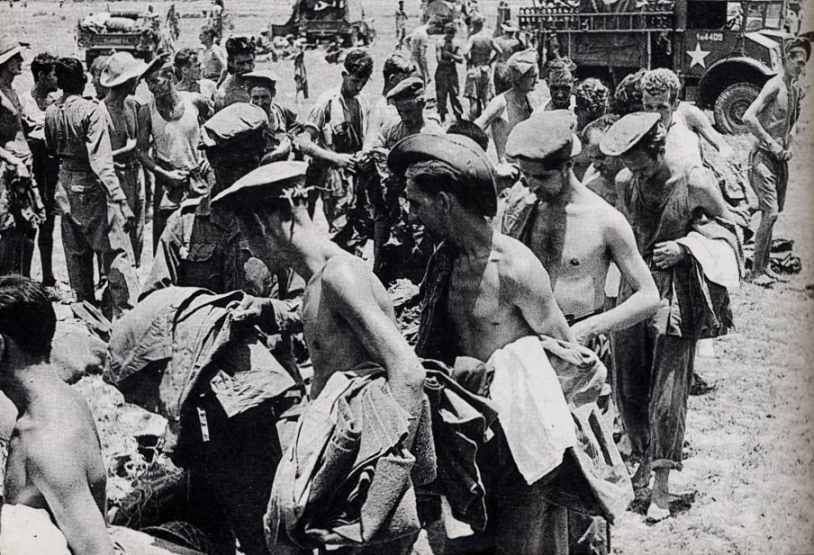
Twenty-five of us were gathered at a prepared landing strip, to be flown to Chittagong and then on towards Poona and a rehabilitation centre, where we were to be built up before the journey home.
The aircraft was a twenty-five-seat Dakota, and I was the last aboard, to find one seat already taken up with luggage; so I sat on the floor, facing the doors. It was stifling, and the Canadian crew took the doors off altogether, which left me looking out into the night sky — pleasant enough, until near Akyab, just off the Burma coast, an engine failed and the pilot banked steeply to circle and land at the airport there, beside the hospital. Now I was looking straight down through the open doorway, and I began to slide towards it; in a panic I threw a hand behind me and caught a strut just in time. Once again I had been lucky that the walls were not upholstered, with nothing to hold.
We came down at Akyab and were met by one of the medical staff from the hospital next door. When the pilot told her we were Japanese prisoners of war, she looked at my face and said I did not look much like a Jap — and was soon put right. The Red Cross there could not do enough for us, the more so when they found we had not had a single Red Cross parcel in three and a quarter years; they pressed hundreds of cigarettes on us, and all manner of things we had gone without for years. One of our own, newly freed, we found chatting at the bedside of a wounded Japanese, arranging to write to him after the war. We thought him very strange, and let it be.
From Akyab we were flown on to Deolali, hospitalised but not confined to bed, issued with a hundred cigarettes every couple of days and two pints of beer a day, with extra on VE Day, while we tried to put back some weight and strength — with a little success. Behind us, the sick men who had been left for the Japanese to abandon had climbed onto the roof of the main building and painted "JAPS GONE" across it for the aircraft to read; and aircraft came over, dropping the food and supplies we needed so badly.
Tom and twenty-four others left for India in another Dakota. A few miles out, a handful of Japanese opened fire on the plane and the pilot threw it into a dive; a young officer near the front fainted clean away, and everyone thought he and the aircraft had been hit. Later, offered the choice of a quick flight home or a longer passage by ship, all twenty-five chose the ship — and so I reached York some three weeks ahead of Tom, and was, I believe, very likely the first ex-prisoner of the Japanese to come home to the city.
Contents · Switch to Bill's manuscript