Chapter Ten
Making Do
Hunger sharpened the wits. Thanks to one of the officers we began to get spinach with our rice at tea-time; he had spotted it growing wild, cultivated it, saved the seed and ate none of it that first season, until in time it covered a whole field outside the jail. We grew sweet potatoes too — a plant unlike anything I had known, a cutting that rooted and then travelled along the ground, throwing down shoots that each grew a potato just beneath the soil. We learned to scratch the earth away, snap off the young potato, and tuck the shoot back so that all looked undisturbed. Eaten raw, it was a treat, nothing like the mature ones.
The cooking was a study in itself. The cook made cake of a kind by grinding rice between two stones into flour and binding it with dubbin — the foul-smelling grease meant for football boots — the cooking at least taking the worst of the taste and smell away. When the Japanese took a fancy to an English breakfast and asked our cooks to make one, the best they could manage was thin-sliced pork fried with eggs; the Japanese finished it off by smothering the lot in sugar, of which they had no shortage, half-filling their water bottles with it before topping up with water. The rice itself was often the sweepings of the store floor, rat droppings and broken glass and all. And there was the time a party sent to work in the Chinese compound came back having been given a stew with more meat in it than they had seen in all their captivity — shortly after which a guard came round looking for his dog, which was never found.
I learned, too, what truly fresh fish was, set to work one day in the cookhouse: a great vat filled with water, brought to the boil, and live fish dropped in to swim about until they were cooked. I do not think we expected anything kinder.
What little we earned we hoarded against a chance to buy a small change of diet. When the pay went up, another chap and I clubbed together for a tin of evaporated milk and put half each on our rice — but after two or three spoonfuls we had to give up; it was more than our shrunken stomachs could take.
Smuggling was its own art, and the searches varied with the sentry, so our hiding-places varied to match. I once carried two purloined eggs in my fundoshi, the loincloth under my shorts; had the "groper" been on duty he would have had a shock at my doubled equipment, but as luck had it he was not. Marching back through the archway one day, doing our version of the ceremonial step for the watching sentries, a tin of fruit dropped from one man's shorts; quick as thought the chap behind scooped it up and hid it before the search, and carried it safely in — only to be met by the first man wanting it back. He did not get it, for the second fellow had risked solitary and a beating not just for the fruit but to save his mate from the same.
Not every man behaved so well. One of the lads, sick in bed, decided to sell a spare shirt — clothing fetched wild prices in Burma — and asked a certain sergeant to sell it for him. I was on the same working party and heard the sergeant turn down a high offer, take the next, and hand the sick man a pittance, pocketing twenty times as much himself.
We made our own amusements where we could. Two Australians who had escaped a Japanese-held island by rowing for India, only to fetch up in the Rangoon river and be captured, joined us in the camp; one of them, a man of six foot three, lost a game of "do or dare" and had to stand stark naked on a stone plinth as Eros. The Japanese set up a sort of netball court and brought the heavy teak posts a mile from a local school for us to manhandle into place, then formed a team to play us — by rules of their own that were closer to rugby, while we were not allowed to tackle them at all.
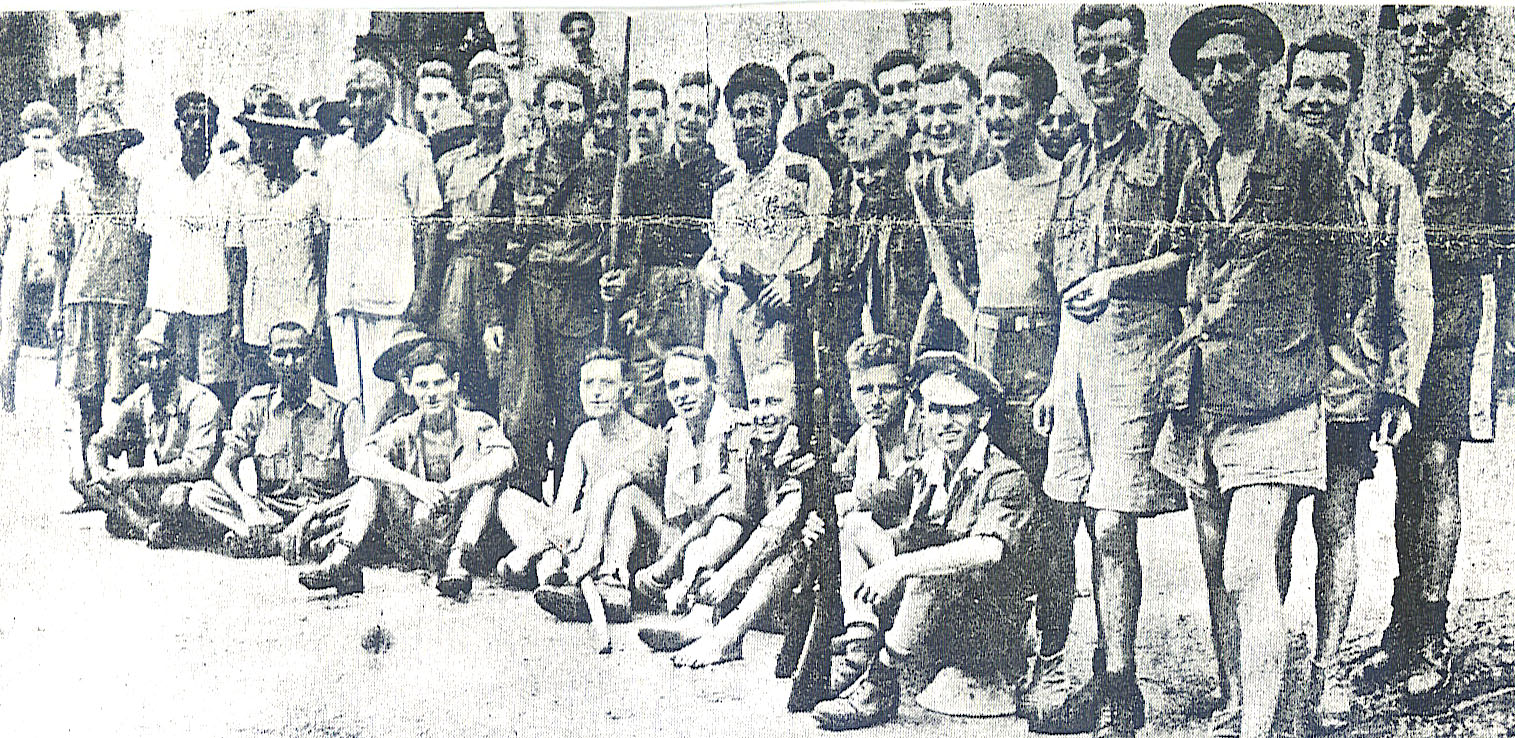
There were friendships, and the teasing that goes with them. My old friend Tom worked in the cookhouse and had to rise early to cook the breakfast rice. He kept his false teeth at night under a sheet of sacking by his wooden pillow, and one morning he came at me in a fury — "Come on, don't muck about, what have you done with my teeth?" None of us had them, but nothing we said would convince him, and the teeth became his one subject until everyone was sick of it. At last another cook, worn down by the wailing, shouted that the rats had had them — and Tom, desperate, began searching the rat-holes in the cookhouse floor, and, surprise of surprises, found them, washed them in cold water, and had them back in his mouth within minutes. He never did apologise to me.
Tom drew a second ribbing later, when he grew friendly with another chap to whom he passed his extra cook's rations. The others decided, as a joke, to marry them: one wore a clerical collar, Tom's pal was wheeled in on a barrow, and amid much hilarity the ceremony was performed. The cooks did well for themselves in other ways too — extra and better food, some of it passed to favoured mates and, it was whispered, to certain officers, which perhaps explained why the cook-in-charge and two others were made up to sergeant, swelling the back pay they drew on return. One officer was grateful enough to buy that cook a small café in England afterwards.
As the war wore on, the Japanese put more of us to concealment and construction. We cleared forests and built bamboo bashas; we cleared a whole plantation of pineapples, hundreds of them thrown away and wasted. One Yank sat up night after night trying to catch a bullfrog we could hear calling, for the pot, and never did. An officer planted the seeds of a papaya he had got on a working party; three came up, but only the female bore fruit, and there was never enough of it to matter. There was building, too, of the rougher kind. We patched the jail with the Japanese notion of mortar — soil mixed with quicklime and water, trodden by our bare feet, which it burned raw. When a bomb breached the great prison wall we built it up again, two brick skins with nine feet of that mortar packed between, hours upon hours of labour — and then the heavy rains came while it was still wet, and the whole of it collapsed. We made a bomb-proof shelter, too, of the cell block's two floors, carrying bricks six at a time on our heads up to the second storey to drop into the ground floor below until it was filled. Through all of it our talk turned, and turned again, to which regiment would be the one to set us free — for it was well past the Christmas by which we had first sworn we would be home.
Contents · Switch to Bill's manuscript