Chapter Six
The Big House
Rangoon Jail had been built to hold civilian prisoners — twenty to a cell, in blocks of five cells, with six blocks radiating like spokes from a central hub that was a water tower. From the air, much later, it would show that shape plainly.
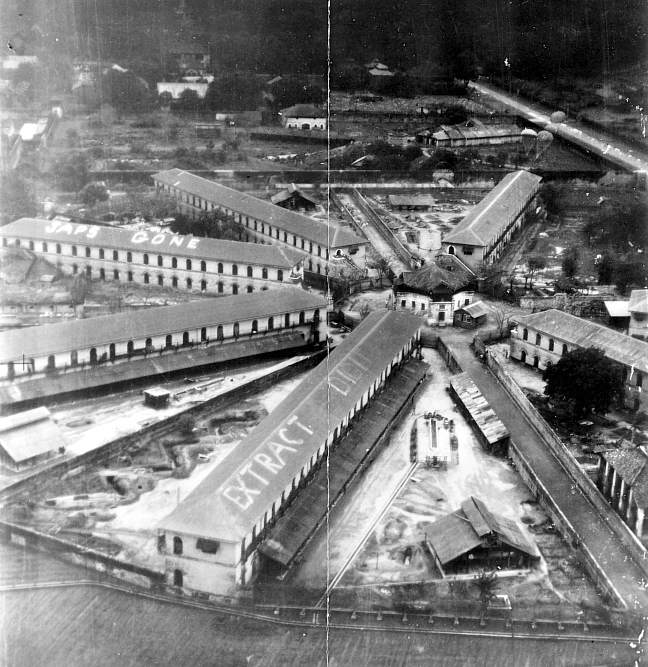
We were marched into No. 3 block to find playing cards scattered all over the floors. We gathered them up anyhow, to be sorted into packs later; for a long time those cards were our only entertainment. We were confined to the cell — thirty-odd of us where twenty had been intended. A few had wooden slatted beds with wooden pillows; the rest of us slept on the floor. The beds were riddled with bugs, so it was hard to say who was the better off. In time we worked the beds loose from the floor and dragged them out into the sun, which drove the bugs out to make their way back to the buildings, most of them perishing on the journey.
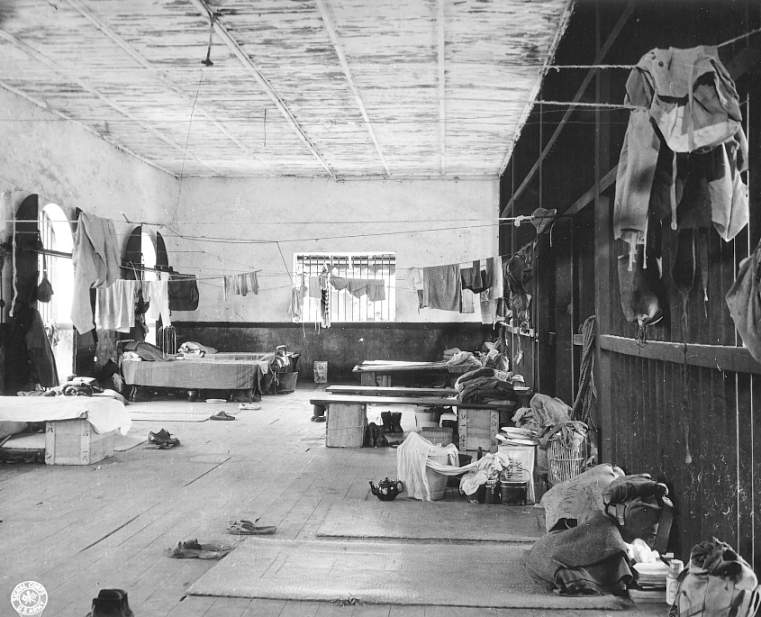
The hours passed slowly, with nothing to fill them but cards, played in groups, and the sharing of a cigarette rolled from cheroot tobacco in newspaper or whatever scrap of paper we could find.
It was here that the book got its name. The Japanese flag had been a red semicircle with rays on a white ground; this was changed to a plain red disc on white, the rays gone. We called it the red chapatti — an insult to our captors, and a small thing to hold on to. It is the nickname I have given to this account.
Contents · Switch to Bill's manuscript