Chapter Five
Captured
We realised at last that our only hope was to strike north, towards India. Having gone a certain distance we came upon a river. A great many of us could not swim, so we turned back and sheltered in a large hut. From there we could see a mass of Japanese, camped up at a rubber plantation where we ourselves had once camped. By now most of our weapons were useless with rust, and there was little we could do when the enemy patrols found us. We were taken prisoner and marched to the plantation.
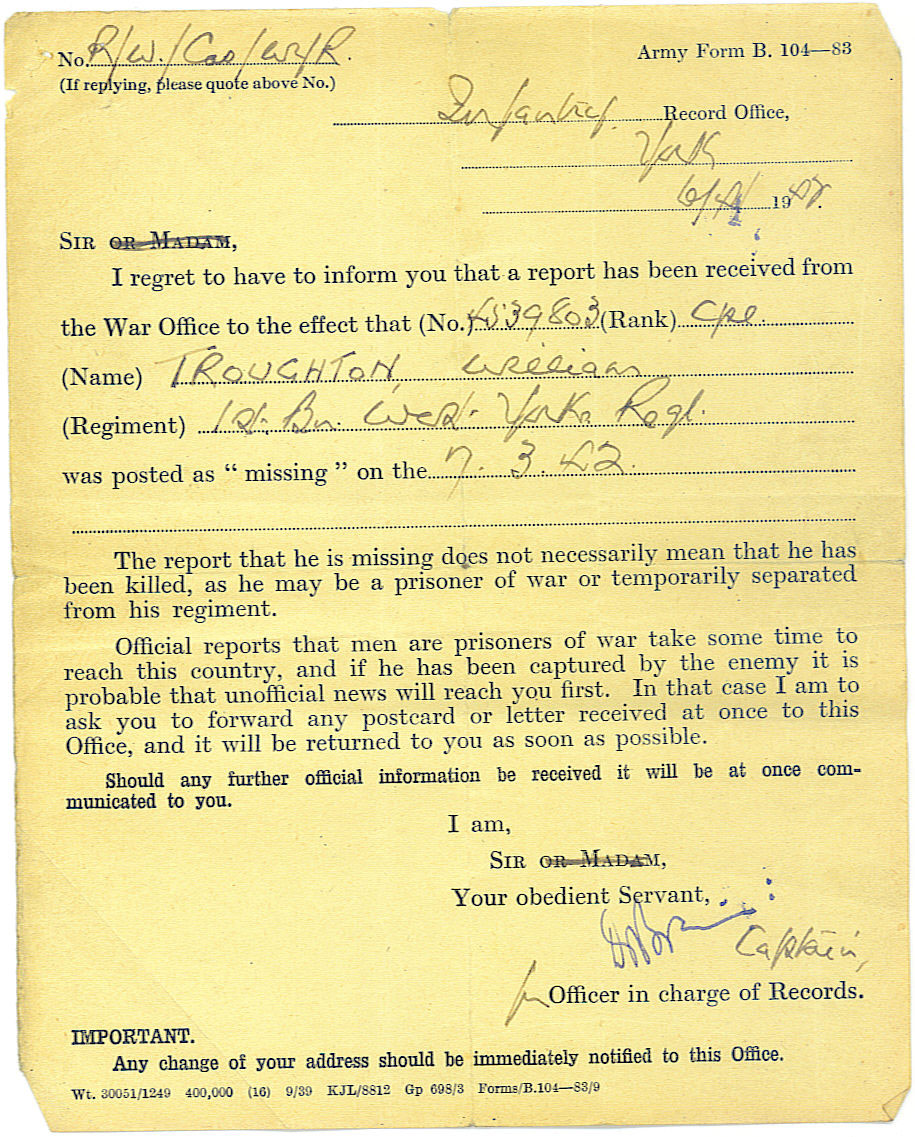
Word of all this took its own slow road home. My family received a War Office form telling them only that I had been posted "missing". It did not say I was dead; it said merely that I might be a prisoner, or temporarily separated from my regiment, and that they should wait. They would wait three years.
From the plantation we were marched to a large house some miles back towards Rangoon, given a space to sleep and a small area for the day. After a couple of days a party of men, Tom among them, was sent into Rangoon for rations of rice and dried potatoes. Two of our number were appointed cooks, on the strength of experience they claimed to have. Their only utensil was a metal bath tin, which they filled with rice and water and set over the open fire. They used perhaps a quarter of the water needed, and the result was a mass of burnt, half-cooked rice that we ate over the next three or four days.
Then we were told we were to go to a big house in Rangoon, and set off to march there. As we passed the city prison, Tom assured everyone that it was now a ration store, which we would go by on the way to the "Big House". He was entirely wrong. The "Big House" was the prison, and we halted outside its gates, were searched, and were taken inside. There we emptied our pockets and whatever containers we carried, for the Japanese to take anything they thought we should not have — knives, forks, even the needles from our housewives, all of which, they said, might be used as weapons.
Contents · Switch to Bill's manuscript